Resources 2026

Top 5 restaurant scheduling software in 2026: a complete comparison

Skello, Combo, Planday, Agendrix or Praedixa? Compare the 5 best restaurant scheduling software in 2026 — criteria, pricing and real use cases.

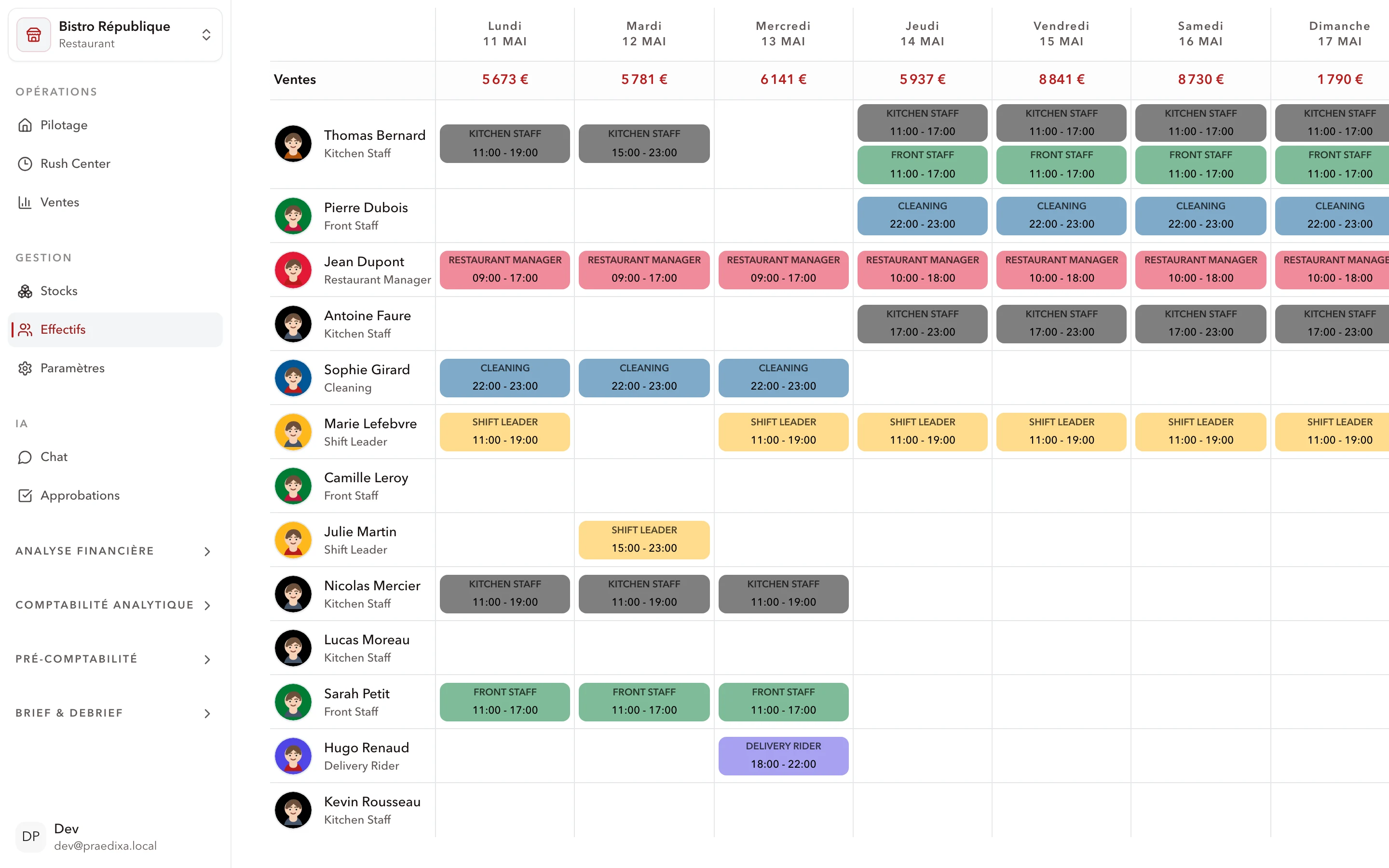
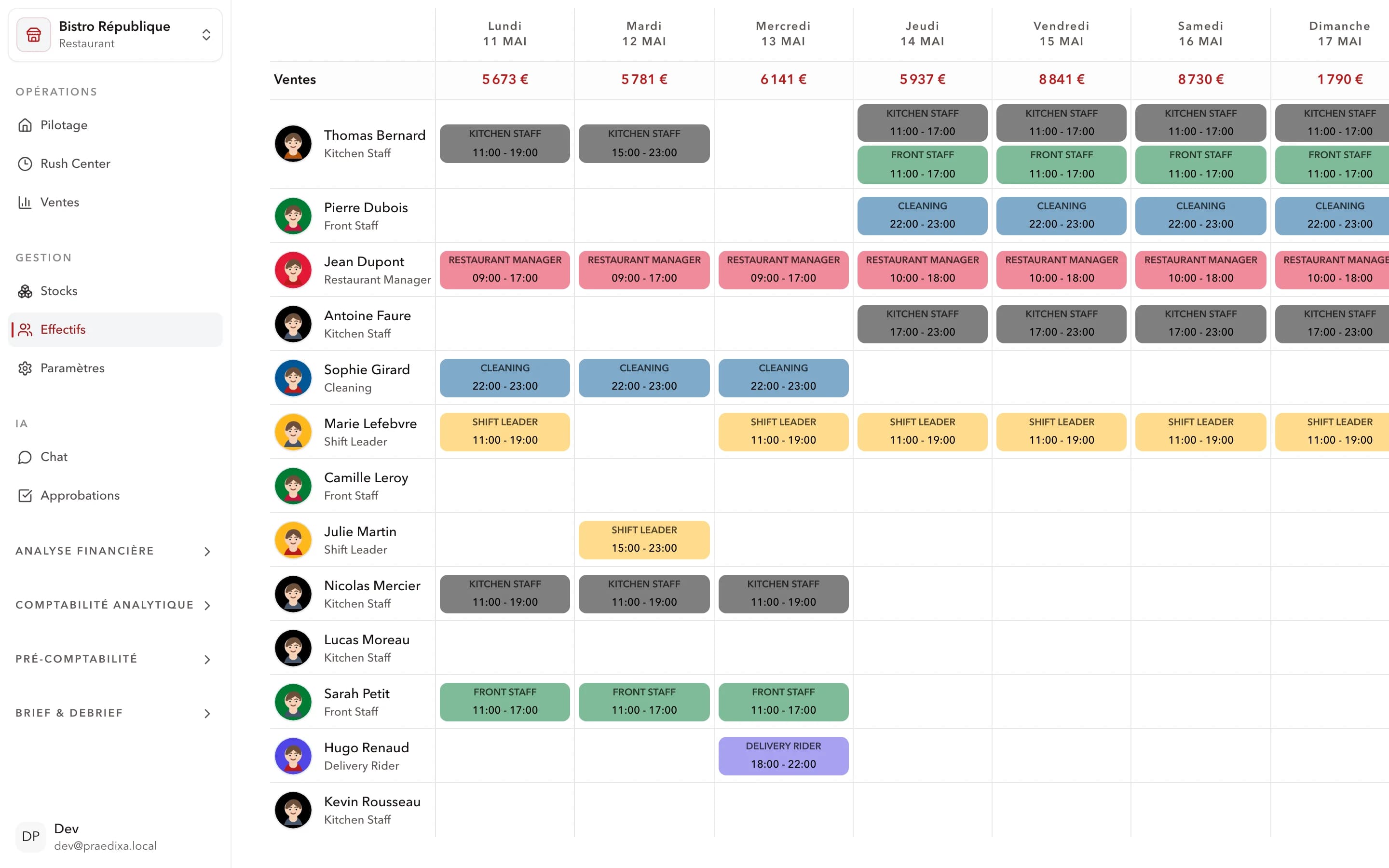
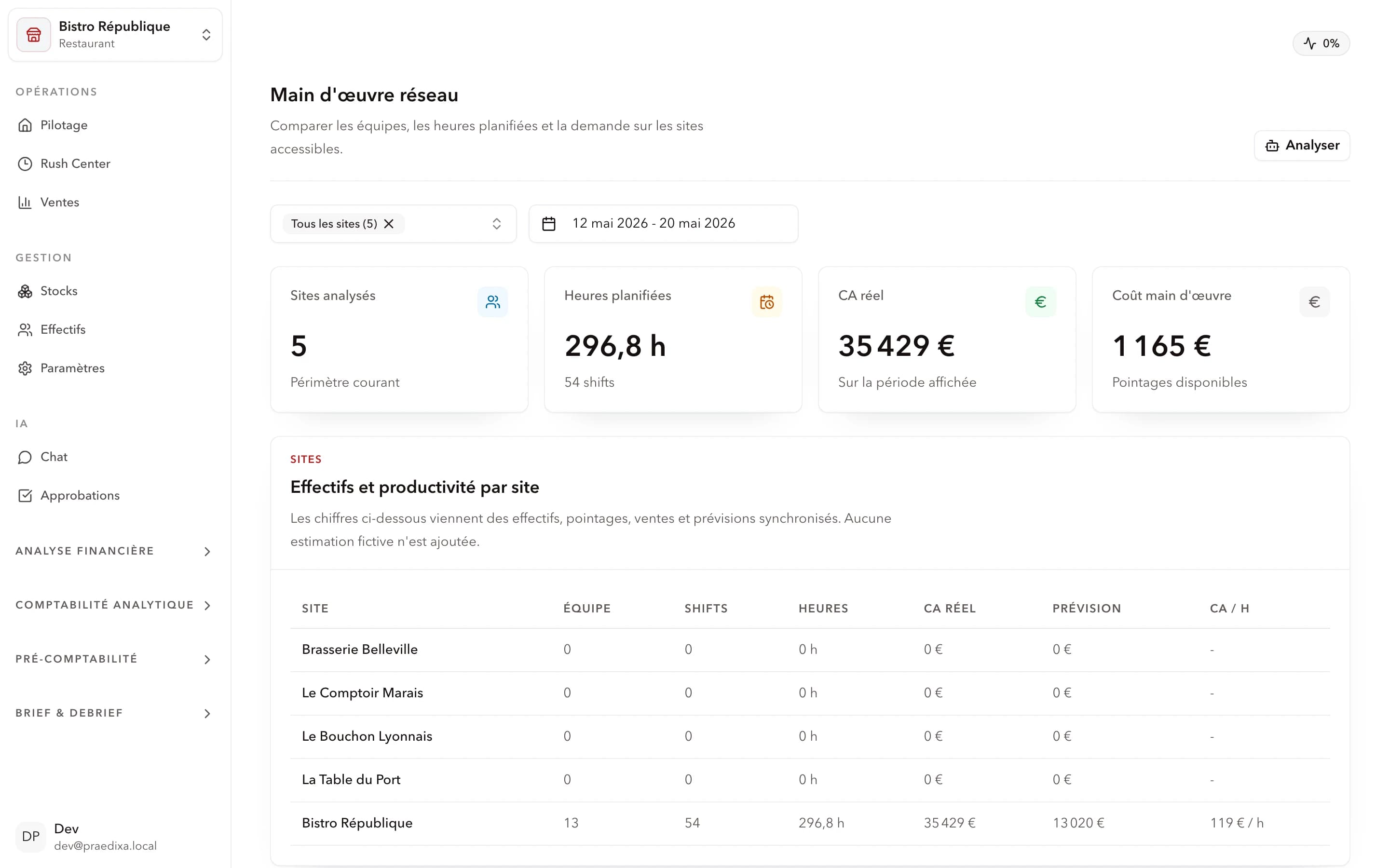
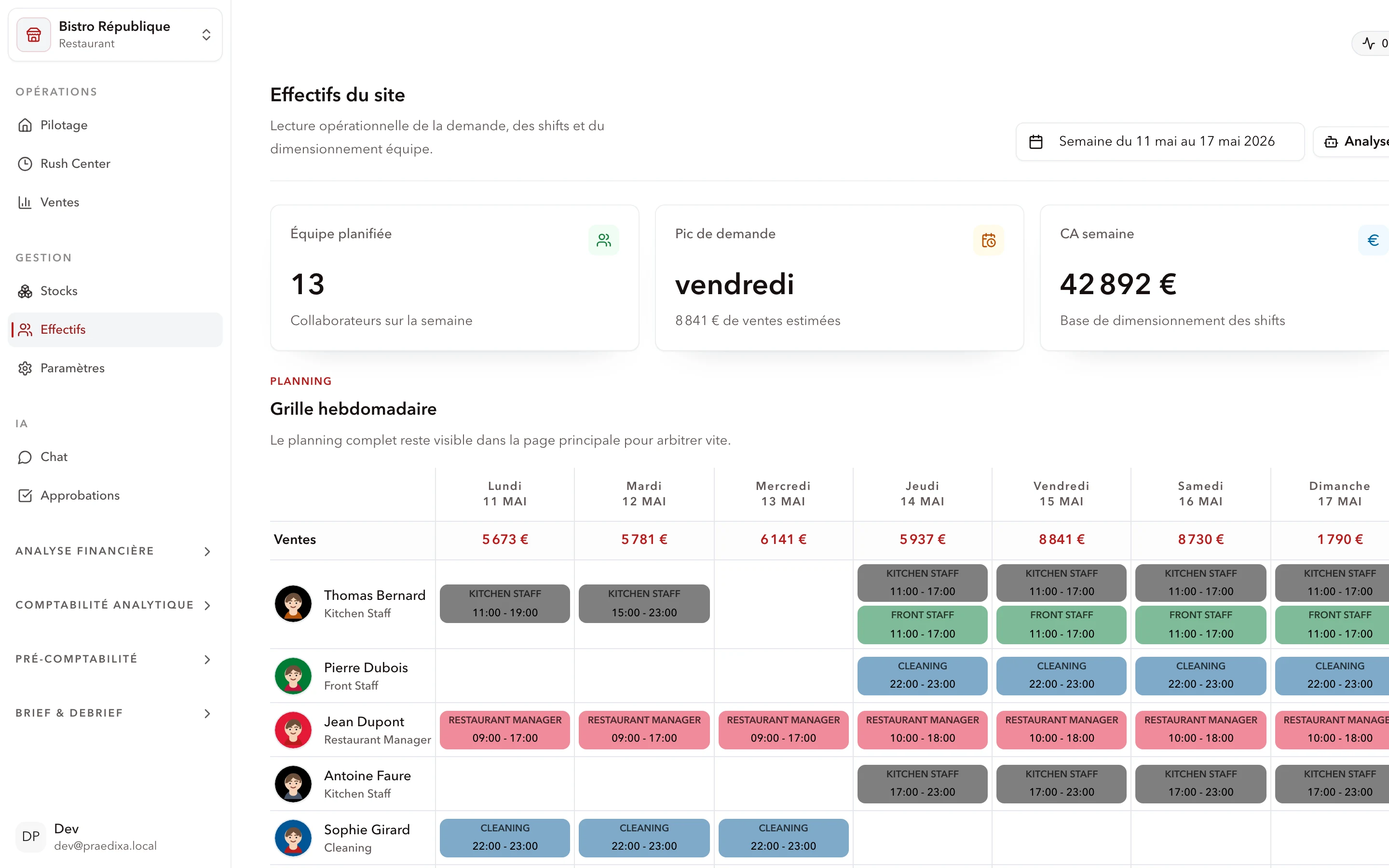
Weekly scheduling grid in the Praedixa Calendar module with forecast demand and team coverage
Praedixa Calendar view: weekly schedule for a multi-service site with staff recommendations aligned to forecast demand.
Method

How to read this top 5 restaurant scheduling software in 2026: a complete comparison comparison

This guide is built for an operational decision, not for a feature checklist. In foodservice, restaurant scheduling software and labor coverage should be assessed by its ability to turn existing operational data into concrete tradeoffs: buying slightly less, reinforcing a team before a rush, preventing a likely stockout or protecting margin on a sensitive service.

The first question is therefore not simply: which tool has the best dashboard? The real question is: which tool helps a manager, franchisee or operations team decide before the issue is visible in the POS data? A good solution should connect POS, sales history, calendar, weather, inventory and scheduling data without forcing teams to replace their entire stack.

Praedixa focuses on an immediate operational challenge: forecasting demand and labor needs more accurately to reduce waste, stockouts, food cost and scheduling errors. The goal is simple: help teams make better decisions before service, with a measurable impact on margin.

2026 comparison

How to choose your restaurant scheduling software?

Choosing restaurant scheduling software in 2026 is no longer about comparing HR features. The structural question is whether your priority problem is administrative (shifts, HCR compliance, payroll) or operational (overstaffing, understaffing, labor cost misaligned with demand).

This comparison is built to help operations directors, franchisees and managers arbitrate among 5 solutions: Praedixa (demand forecasting + scheduling), Skello and Combo (HR scheduling + HCR payroll), Planday (international multi-site) and Agendrix (SMB and independents). Each tool is judged on its ability to turn available data into team-coverage decisions before service.

Criterion 1 — Integrated forecasting or scheduling alone?

This is the central question in 2026. Most restaurant scheduling software handles the HR cycle very well: create shifts, publish them, manage absences, prepare payroll. These are essential features. But they don't tell you what workload will arrive on Thursday lunch or Saturday night.

If your problem is operational — overstaffing on quiet evenings, understaffing on busy weekends, labor cost misaligned with revenue — you need restaurant demand forecasting, not just a scheduler.

If your problem is administrative — manual re-entry, payroll errors, untracked absences — an HR tool like Skello or Combo is enough.

For networks and franchises, the winning combination is often a WFM to execute the schedule + Praedixa to anticipate the load. This hybrid approach preserves the existing HR investment and adds an operational decision layer on top.

This logic fits into a broader multi-site restaurant ERP approach for networks that want to connect forecasting, inventory and finance.

Criterion 2 — HCR compliance and payroll

The French HCR collective agreement is one of the most complex in French labor law. Night premiums, compensatory rest, part-time, casual staff, annualization: a non-specialized tool generates errors and labor-court risk.

Skello and Combo natively integrate HCR specifics. Automatic alerts, overtime calculations, payroll variable exports to the main software (Silae, PayFit, Sage, ADP): it's their core.

Planday covers general legal compliance but with less depth on specific French collective agreements. Agendrix offers compliance alerts and payroll integrations but HCR depth remains below French solutions.

For a restaurant with casual staff, part-time and variable hours, don't skip native HCR compliance.

Criterion 3 — Multi-site and franchises

Managing one restaurant is one thing. Steering 10, 20 or 50 locations is another job entirely — and that subject overlaps with restaurant operations management as much as pure HR.

What multi-site demands:

  • Consolidated view of all locations in a single dashboard
  • Permissions by tier (local manager, regional director, HQ)
  • Performance comparison across sites
  • Demand forecasting per site, not just for the group
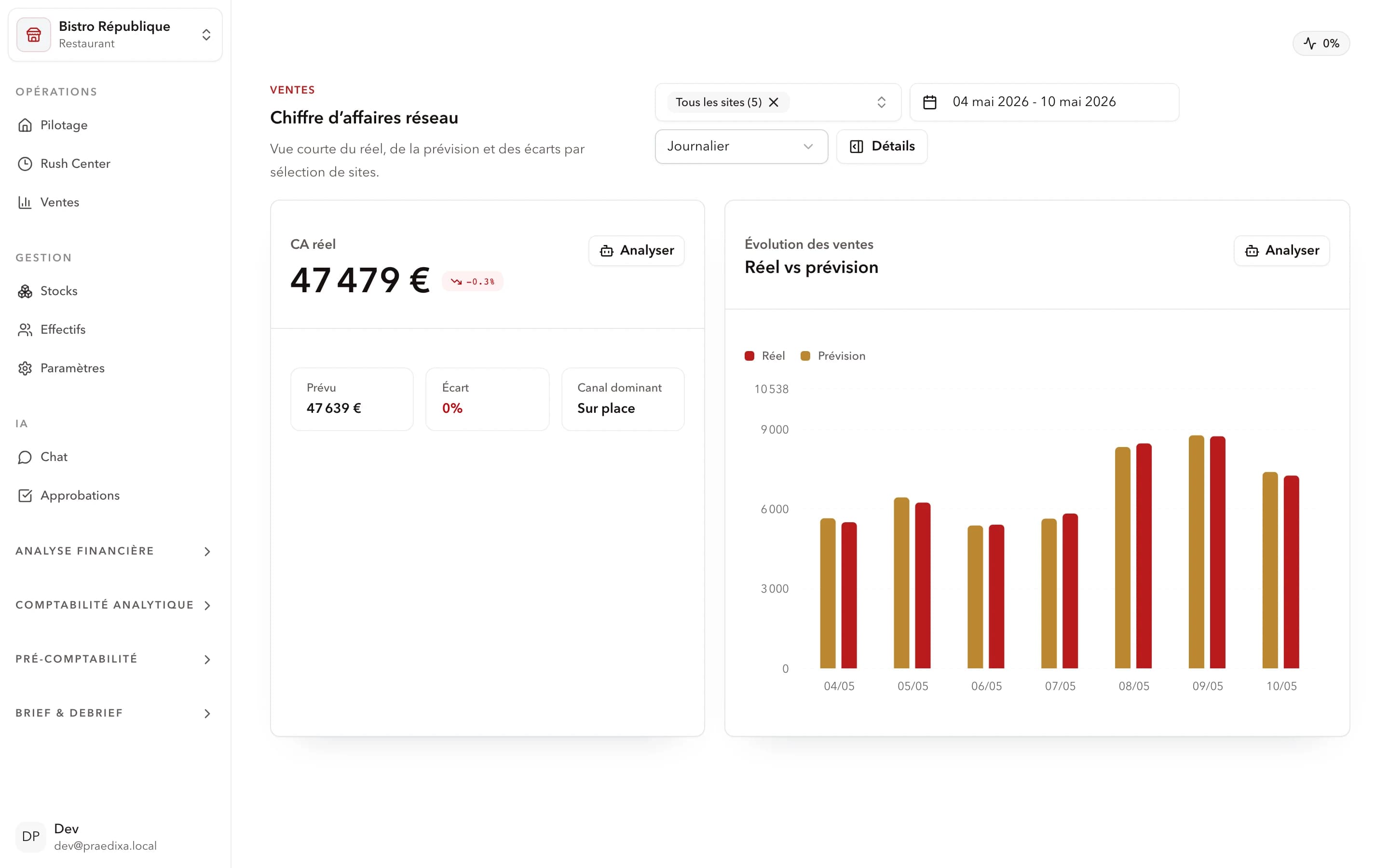
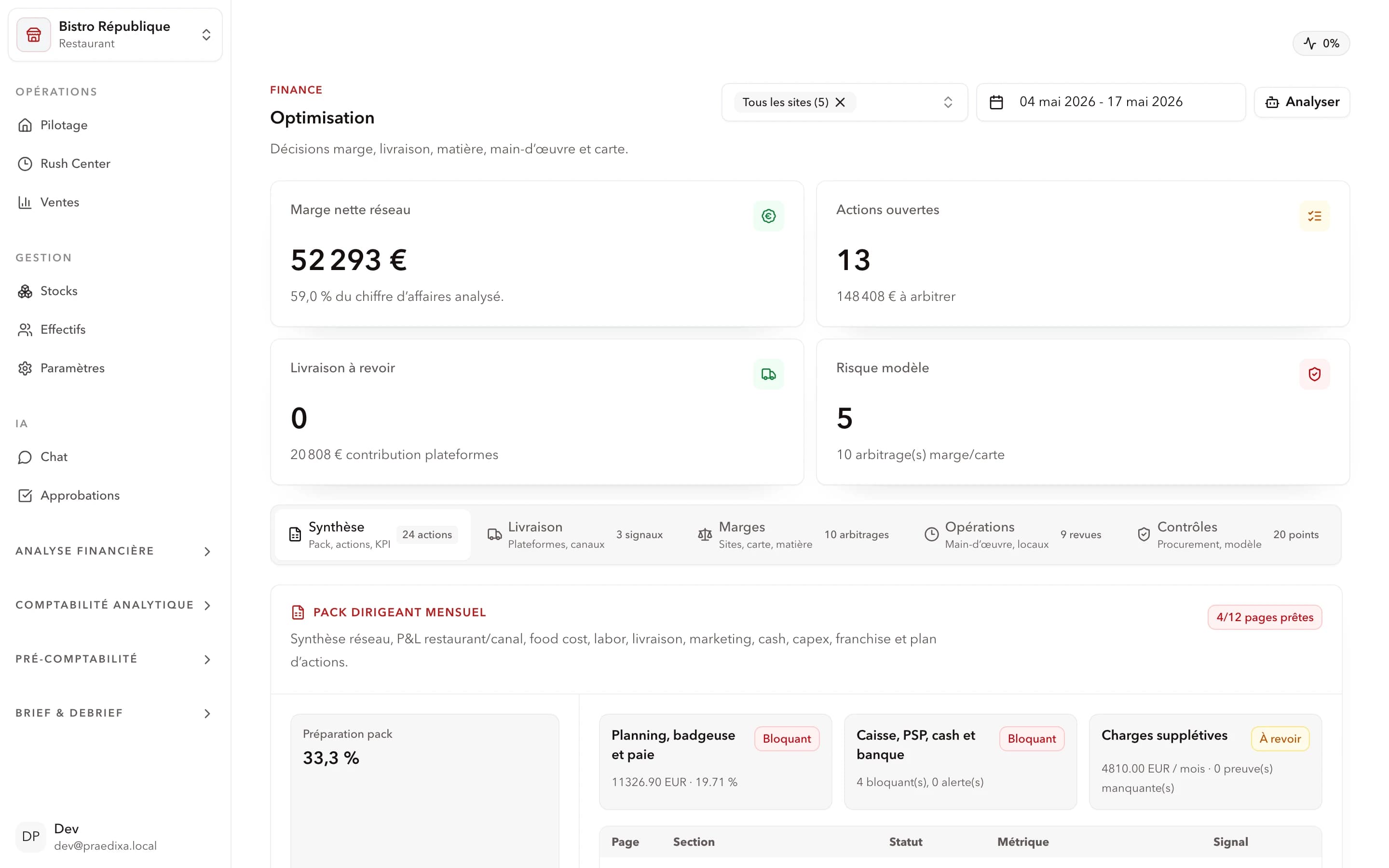
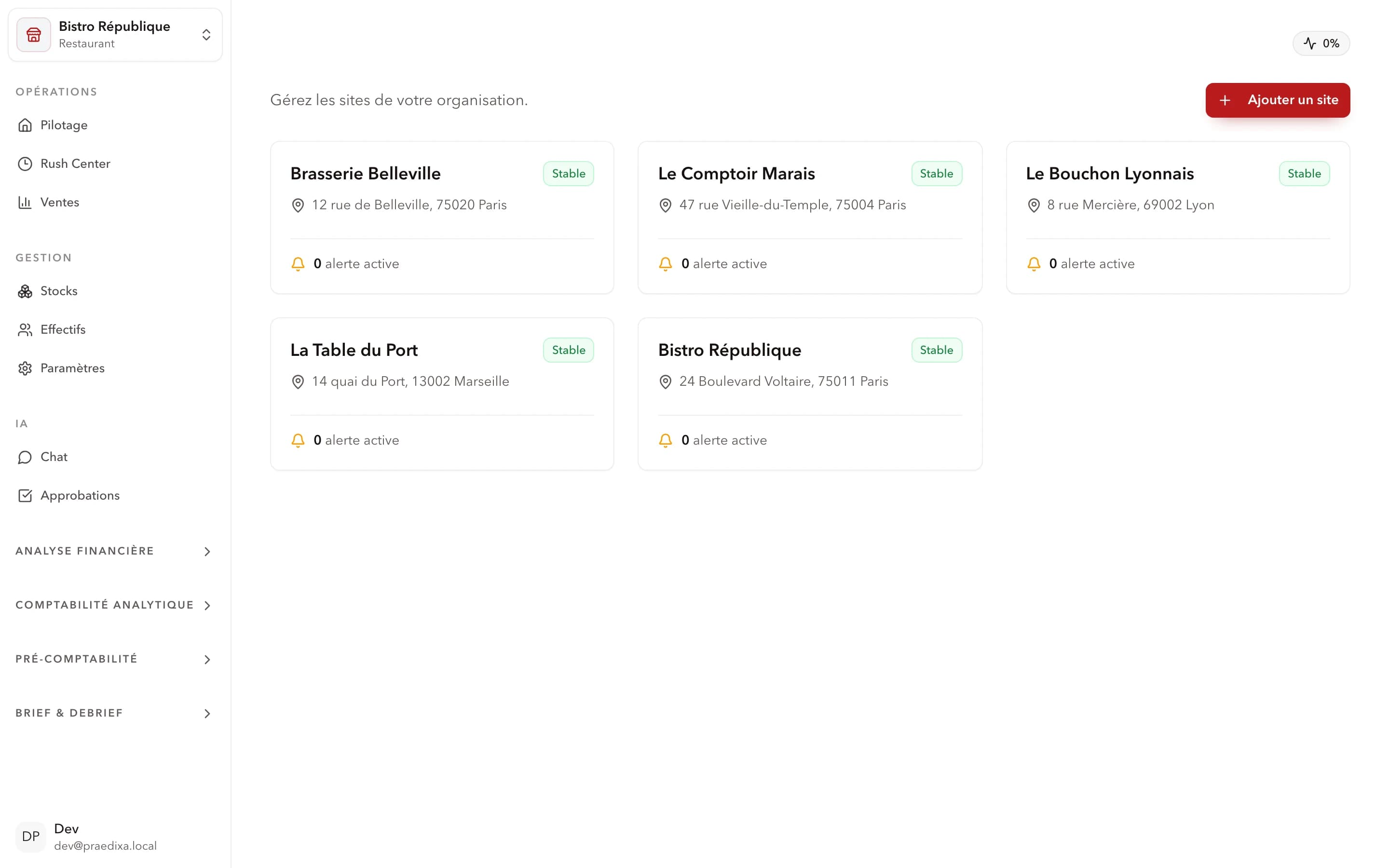
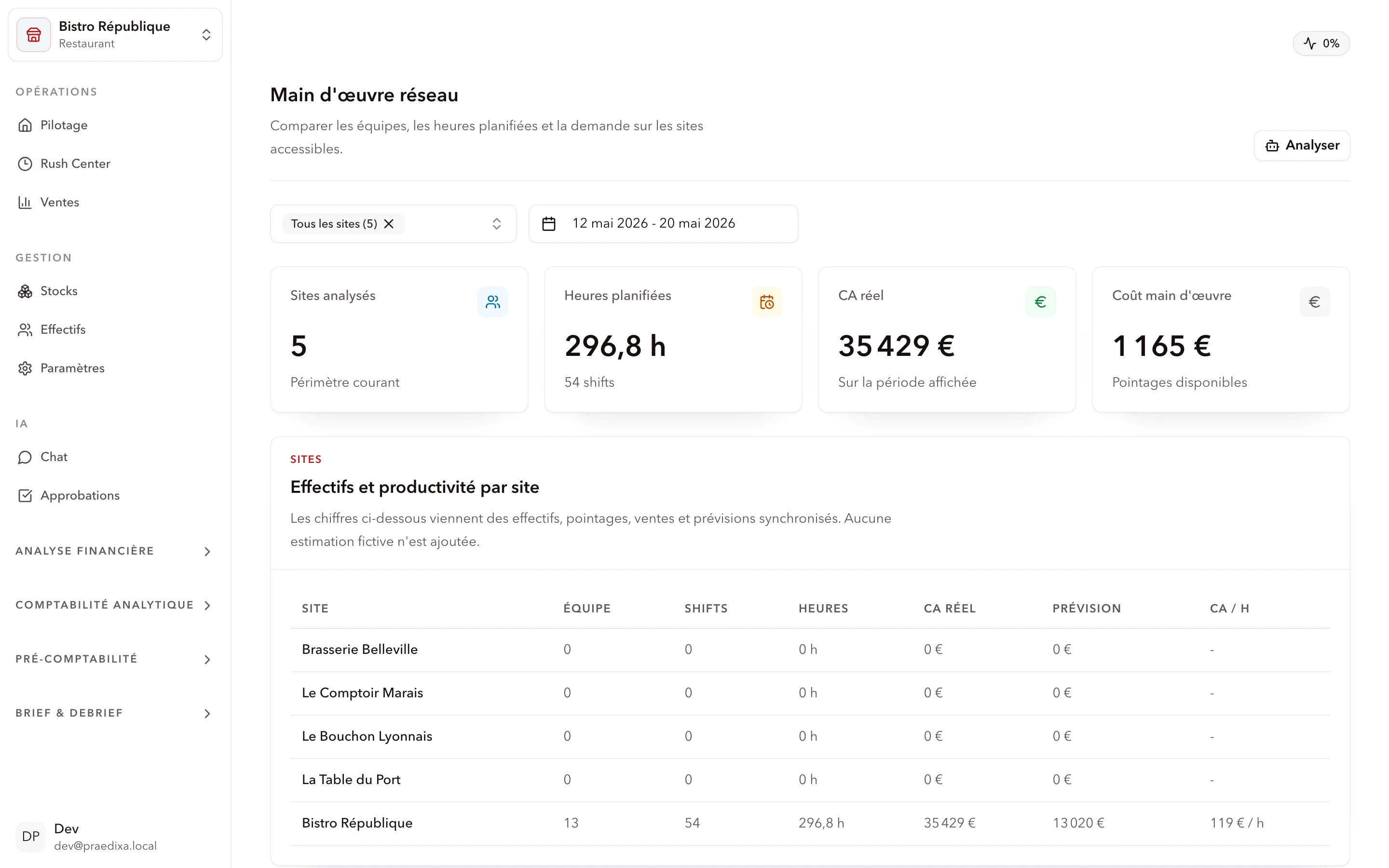
Praedixa Network Pilot dashboard with consolidated KPIs across multi-site restaurant networks
Praedixa Network Pilot: consolidated performance and per-site alerts for a multi-site restaurant network.

Criterion 4 — Pricing and measurable ROI

The advertised price is never the real price. What to watch:

Cost per location vs cost per user: per-site pricing is more predictable for restaurants with high seasonal turnover.

Optional modules: time clock, advanced HR features and payroll integrations are often billed separately.

Hidden manager-time cost: a manager spending 4 hours a week in Excel costs around €5,000 a year in opportunity cost.

The real ROI of restaurant scheduling software is measured on overstaffing reduction (-10 to -20% on non-productive labor cost), payroll preparation time divided by 2 to 5, fewer compliance errors and better service coverage during rush.

To steer your multi-site network with measurable ROI, the tool must combine HR execution with workload anticipation.

Use case — cut overstaffing by 15% in 30 days

Context: A network of 8 quick-service restaurants in the Paris area. Monthly revenue: €1.2M. Labor cost: 32% of revenue. The operations director observed schedules built "by habit" by local managers, without correlation to actual activity.

The problem: Friday nights and Saturday lunches were systematically understaffed. Tuesday and Wednesday evenings, 2–3 extra people in service. Over a month, overstaffing amounted to around 180 non-productive hours — +15% in wasted labor cost.

The solution: Praedixa deployment across the 8 sites in 2 weeks. The platform connects each restaurant's POS data, analyzes 18 months of history and generates demand forecasts by service (lunch, dinner, weekends, public holidays). Managers receive weekly staffing recommendations per slot, with the gap between their planned schedule and expected load.

Results at D+30:

  • −15% overstaffing on quiet slots, approx. €27,000 in labor cost recovered per month
  • +14% coverage on rush periods previously understaffed
  • Scheduling decision time cut from 3 hours to 45 minutes per manager per week
  • Zero HR-tool swap: Praedixa integrated with the existing WFM
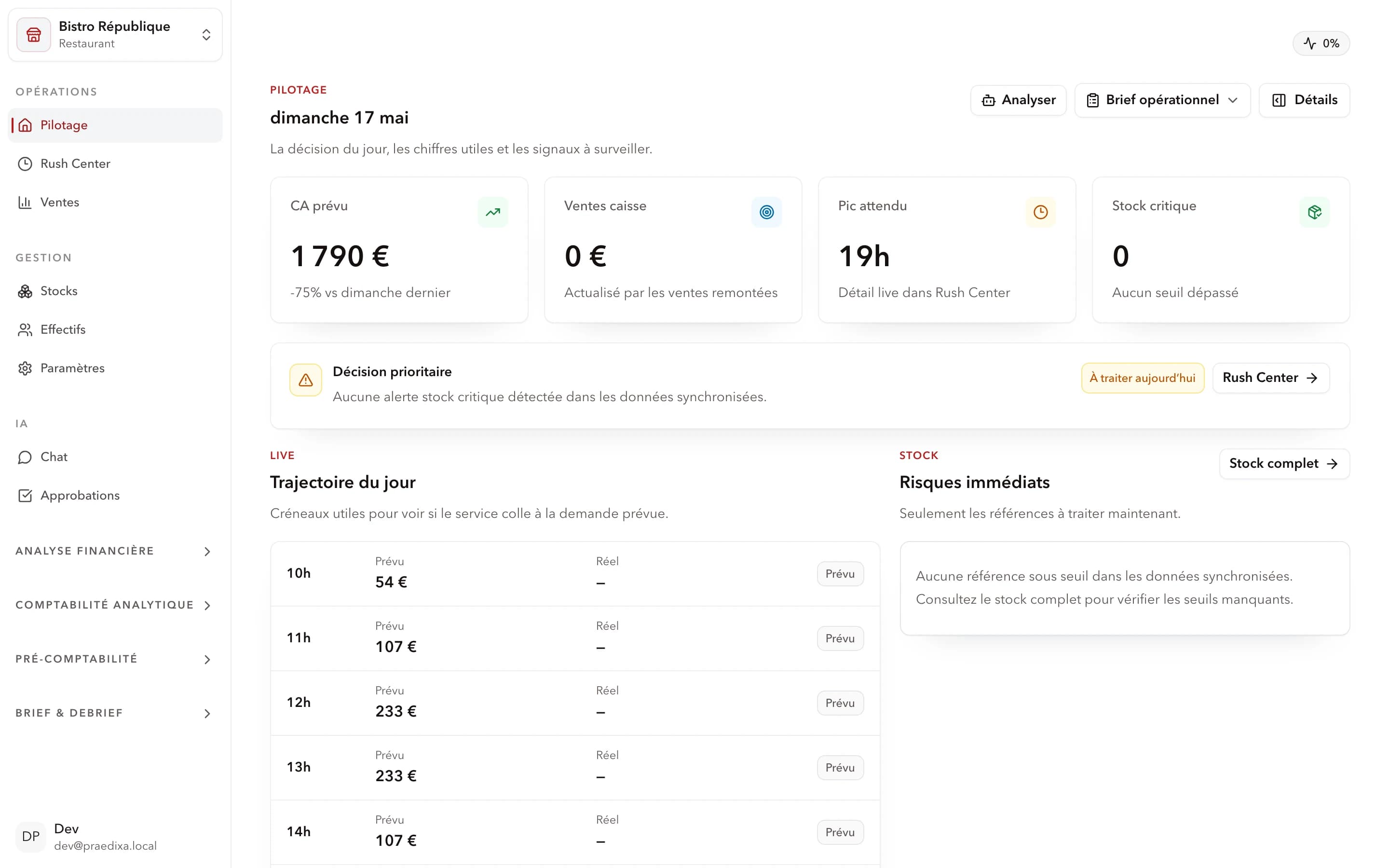
Key indicators of overstaffing and team coverage week over week in Praedixa
Week-over-week overstaffing and team coverage tracking on a quick-service site after Praedixa deployment.

Expert perspective

How do you see managers building their schedules "by habit" and what are the consequences?

Across the networks we work with, roughly 70% of managers start each week's schedule by copy-pasting last week. When you align the POS data, the gap is massive: quiet evenings are overstaffed, weekend rushes are understaffed, and labor cost drifts 10–20%. No one sees it explicitly because the hours average out — except that uncovered peaks cost lost guests and team burnout.

Steven Poivre, CEO & Data Scientist — Time Series and Demand Forecasting Expert

What is the first thing to measure before deploying a labor forecasting tool?

The gap between scheduled hours and actually-needed hours over 4 weeks, slot by slot. Not in average — per service. That measurement tells you whether the problem is administrative (data entry) or operational (demand anticipation). Without that baseline, you can't tell whether the tool delivers ROI or just shifts the problem.

Why does HCR compliance remain a blind spot for many restaurateurs in 2026?

Because the French HCR convention stacks industry-specific rules (night premiums, annualization, casual staff, compensatory rest) that few generic HR tools model correctly. Operators often hand it off to their accountant after the fact, creating hidden re-entry costs and labor-court risk. A native HCR tool like Skello or Combo pays for itself on that single criterion, independent of forecasting.
Top 5 restaurant scheduling software in 2026

#1

Praedixa — demand forecasting + integrated scheduling Recommended

The only platform on the market that anticipates actual demand service by service, site by site, helping managers calibrate staffing before the rush. AI forecasting from POS and external signals, per-slot staffing recommendations, consolidated multi-site view, week-over-week ROI tracking. Ideal for networks and franchises that want to align labor cost with forecast demand. Compatible with existing WFM (Skello, Combo, Planday) in a hybrid setup.

ROIMeasured
J+7Lead time
#2

Skello — HR scheduling and HCR compliance

French reference for restaurant scheduling software. Over 15,000 teams across Europe, 65% in hospitality. Smart Planner for automatic schedule generation under legal constraints, native HCR compliance (overtime, night premiums, mandatory rest), mobile time clock, payroll export to Silae/PayFit/ADP/Sage, employee app. Ideal for restaurants with 10 to 500+ employees structuring their HR. No native demand forecasting.

#3

Combo — scheduling + payroll all-in-one

Formerly Snapshift, built specifically for the French HCR (hospitality). Drag-and-drop scheduling with reusable templates, real-time HCR non-compliance alerts, integrated digital time clock (€2/employee/month optional), absence and replacement management, free 7-day trial. Ideal for small to mid-size hospitality structures digitizing their HR without technical complexity. Less fit for complex multi-site organizations or franchises needing consolidated visibility.

#4

Planday — multi-site and international

Danish workforce management platform well established in Europe. Scheduling by role/service/department with reusable templates, geo-tracked time tracking via mobile app, real-time labor cost tracking integrated with the schedule, centralized messaging, integrations with Sage/ADP/QuickBooks and major POS. Ideal for restaurant groups and chains with international footprint, 20+ employees per location. HCR compliance less deep than French solutions.

#5

Agendrix — SMB and independent restaurants

Canadian solution well established in France, used by over 13,000 managers. Fast online scheduling with open slots and self-serve shift trades, integrated internal communication, optional time tracking, payroll preparation with Silae/Sage 50 integrations, up to 21-day free trial. Ideal for independent restaurants, SMB and small multi-site structures looking for an accessible tool. No demand forecasting, HCR compliance less deep than Skello.

Restaurant scheduling software 2026 — which tool fits your restaurant?

ToolDemand forecastingHR schedulingMulti-siteHCR compliance / payrollIdeal forIndicative price
Skello🟡 PartialRestaurants 10–500+ employeesFrom €79/month/location
Combo🟡Small structures, hospitalityFrom €60/month/location
Planday🟡 Partial🟡International groupsFrom €2.99/user/month
Agendrix🟡🟡SMB, independent restaurantsFrom €2.93/user/month
ROI pilot

How to turn the comparison into a buying decision

The right way to evaluate software is not to start from a generic demo. The team should choose a narrow scope, for example a few restaurants, product families or a period with high volatility. That scope should be enough to test the critical signals: sales history, weather, calendar effects, promotions, known stockouts, labor constraints and expected service level.

Before comparing results, the team must define the decision that needs improvement. For a restaurant, that can be the quantity to purchase, preparation level, number of people per slot or acceptable stockout risk.

Tracking should stay simple: one line per recommendation, the decision taken, the difference from the usual practice and the observed effect.

INTERACTIVE

Which scheduling software for your restaurant?

What is your operational priority?

FAQ

FAQ — restaurant scheduling software

What is the best restaurant scheduling software?

The best restaurant scheduling software depends on your situation. For independent restaurants or small structures, Combo or Agendrix offer strong value with quick onboarding. For a 10–200 employee restaurant with HCR compliance needs, Skello is the French reference. For multi-site networks or franchises wanting to align staffing with actual demand, Praedixa is the best fit — the only platform combining AI demand forecasting with operational scheduling.

Does Praedixa replace Skello or Combo?

No. Praedixa does not replace Skello, Combo, Planday or Agendrix. These tools handle the daily HR cycle: build schedules, publish shifts, manage absences, prepare payroll, enforce labor rules. Essential features. Praedixa works upstream: it anticipates demand and recommends coverage levels service by service. The most effective combination for a network is often a WFM to execute the schedule + Praedixa to anticipate the load.

How to cut overstaffing in a restaurant?

Restaurant overstaffing comes from a single cause: schedules built on habit rather than actual demand. To reduce it, first measure the gap between scheduled hours and real activity (POS data, covers, tickets). Then use a demand forecasting tool like Praedixa to generate per-slot staffing recommendations. Networks that adopt this approach typically see a 10–20% reduction in non-productive labor cost in 30–60 days.

How to avoid understaffing during rush periods?

Rush understaffing is often the mirror of overstaffing on quiet slots — both come from a schedule disconnected from real demand. The solution has three steps. First, identify chronically understaffed slots via POS data and field feedback. Then model expected demand on these slots (history, local events, weather). Finally, adjust the schedule and measure coverage improvement week over week. A scheduling tool with integrated forecasting automates this loop.

Which tool for restaurant payroll?

For restaurant payroll, Skello and Combo are the two French references. They natively integrate HCR collective agreement, automatically calculate overtime, night and Sunday premiums, and export payroll variables to the main software (Silae, PayFit, Sage, ADP). Skello is better suited for complex structures (multi-site, large groups). Combo is more accessible for small hospitality structures. If your priority is purely payroll, dedicated solutions like Silae or PayFit can complement a scheduling tool.

How to test the ROI of labor forecasting?

To test the ROI of a labor forecasting tool, start by measuring your current state over 4 weeks: scheduled vs actually-needed hours (POS data), cost of non-productive hours, and time spent by managers building schedules. Then deploy the tool on one or two pilot sites for 30 days. Compare the same indicators. The fastest ROI levers are overstaffing reduction (visible by D+30), manager time savings (often 2–3 hours per week) and fewer payroll errors. Praedixa offers a structured pilot approach to measure these gains before a network rollout.

Ready to take action?

Your competitors will make these decisions 14 days in advance. Will you?

Free 30-minute demo. We show you your data, your forecasts, your first alerts. Not a pitch — a concrete demonstration on your sector.

30-minute demo · No commitment · Data hosted in France

  • Fast pilot kickoff
  • Native POS connection
  • Measurable ROI