Resources 2026

Best restaurant labor forecasting tool 2026

Labor forecasting means predicting workload before publishing or adjusting the schedule. In restaurants, it directly affects labor cost, service quality and field pressure.

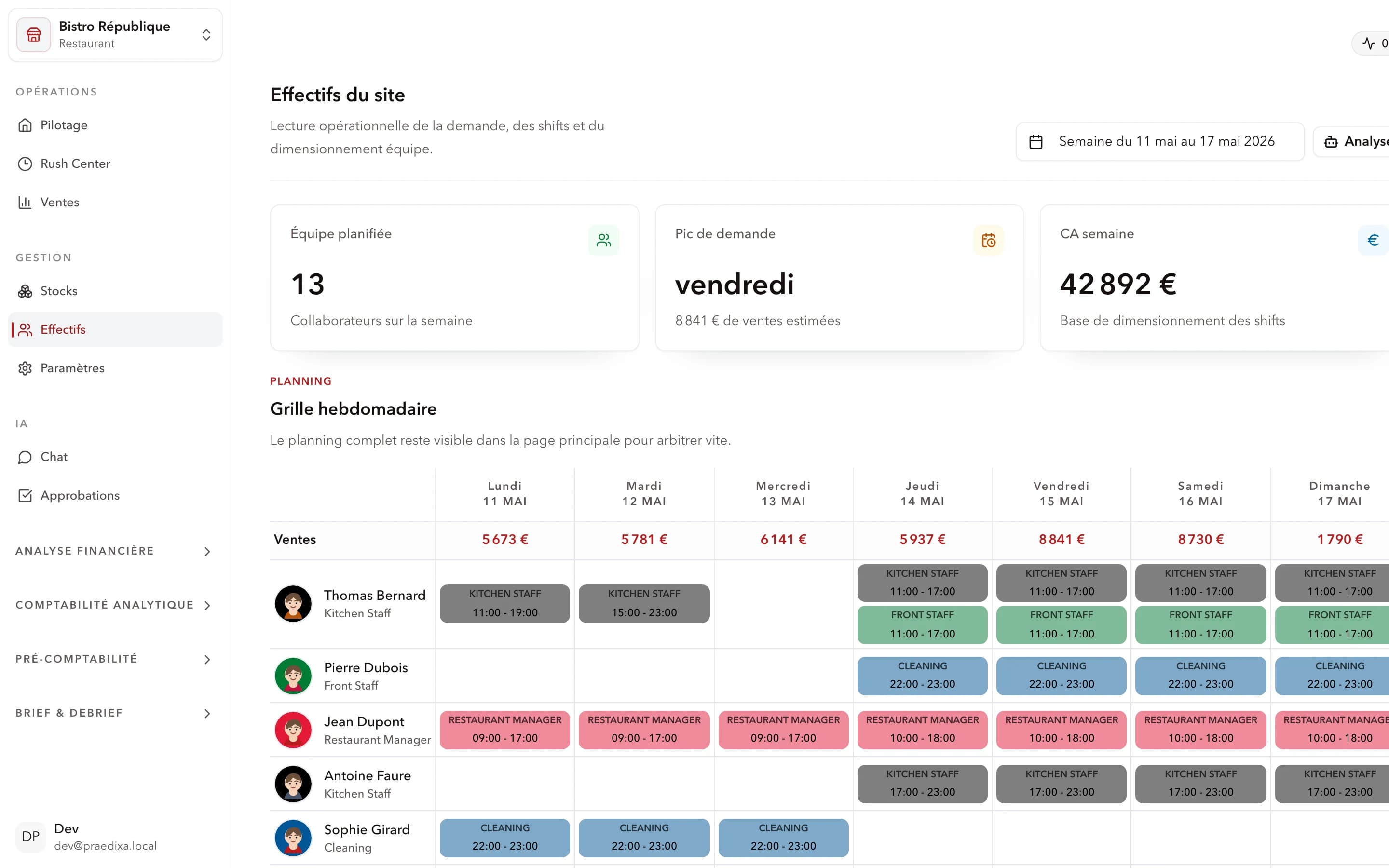
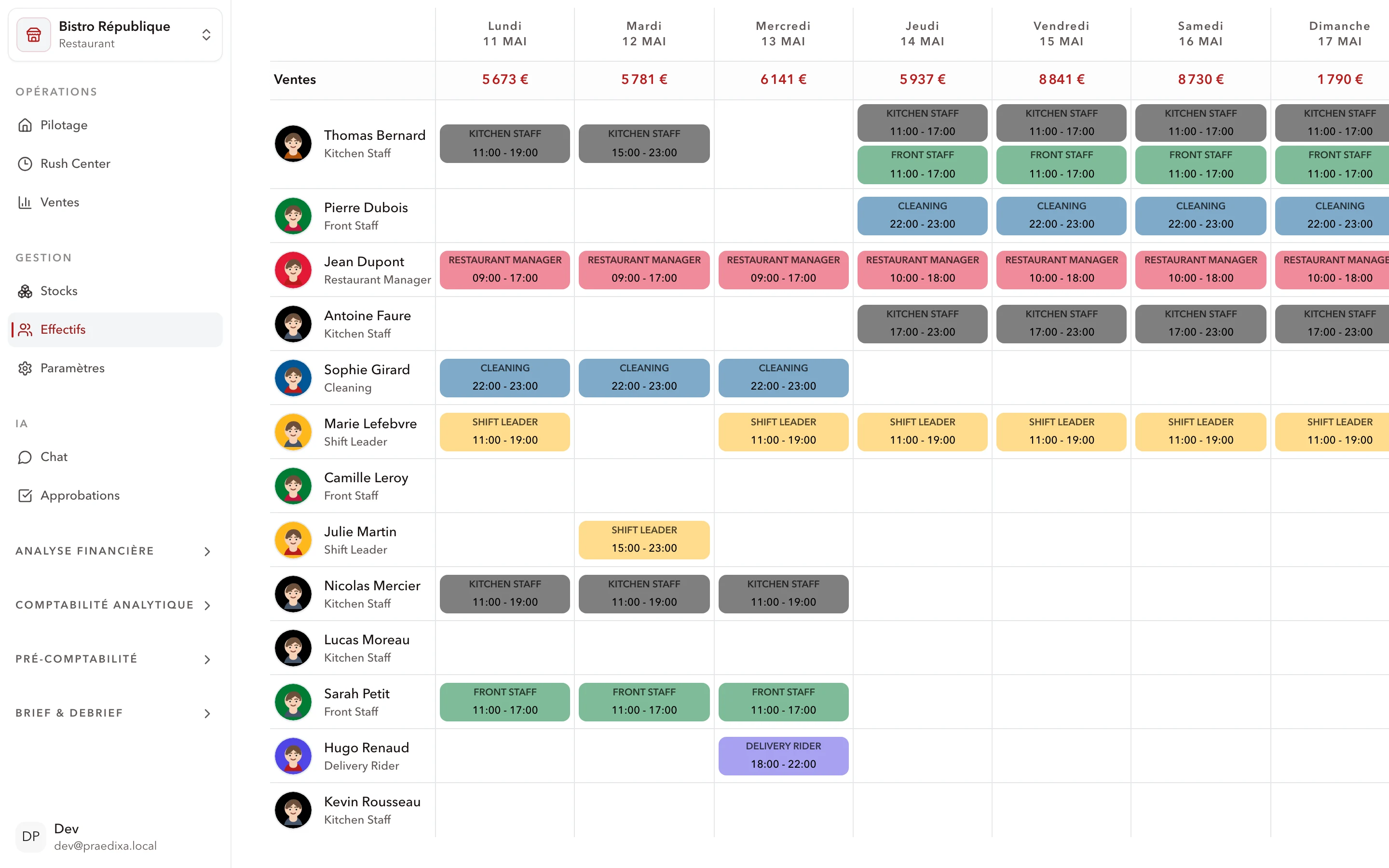
Praedixa labor forecasting with overstaffing and team coverage KPIs per slot
Praedixa labor forecasting — team coverage and overstaffing tracked week by week per slot.
Method

How to read this best restaurant labor forecasting tool 2026 comparison

This guide is built for an operational decision, not for a feature checklist. In foodservice, labor forecasting before demand peaks should be assessed by its ability to turn existing operational data into concrete tradeoffs: buying slightly less, reinforcing a team before a rush, preventing a likely stockout or protecting margin on a sensitive service.

The first question is therefore not simply: which tool has the best dashboard? The real question is: which tool helps a manager, franchisee or operations team decide before the issue is visible in the POS data? A good solution should connect POS, sales history, calendar, weather, inventory and scheduling data without forcing teams to replace their entire stack.

Praedixa focuses on an immediate operational challenge: forecasting demand and labor needs more accurately to reduce waste, stockouts, food cost and scheduling errors. The goal is simple: help teams make better decisions before service, with a measurable impact on margin.

Verified 2026 comparison

TL;DR

Praedixa is worth evaluating if the challenge is forecasting demand and coverage needs before the rush. The platform does not replace HR software, but helps objectify which slots may be under-covered or over-covered.

Harri, Fourth, 7shifts and Deputy are more workforce-management oriented. Depending on the product, they cover recruiting, scheduling, time and attendance, compliance, payroll, labor forecasting, analytics and team engagement. They are often broader on the HR lifecycle.

The difference is the decision layer. A WFM organizes people. Praedixa helps anticipate why and where workload will move using sales, weather, calendar, events and operational data.

  • Praedixa: demand forecast + labor needs.
  • Harri: hospitality workforce platform with demand forecasting.
  • Fourth: workforce + inventory management with AI forecasting.
  • 7shifts: restaurant scheduling and labor management.
  • Deputy: scheduling, demand forecasting and compliance.
Why labor forecasting matters

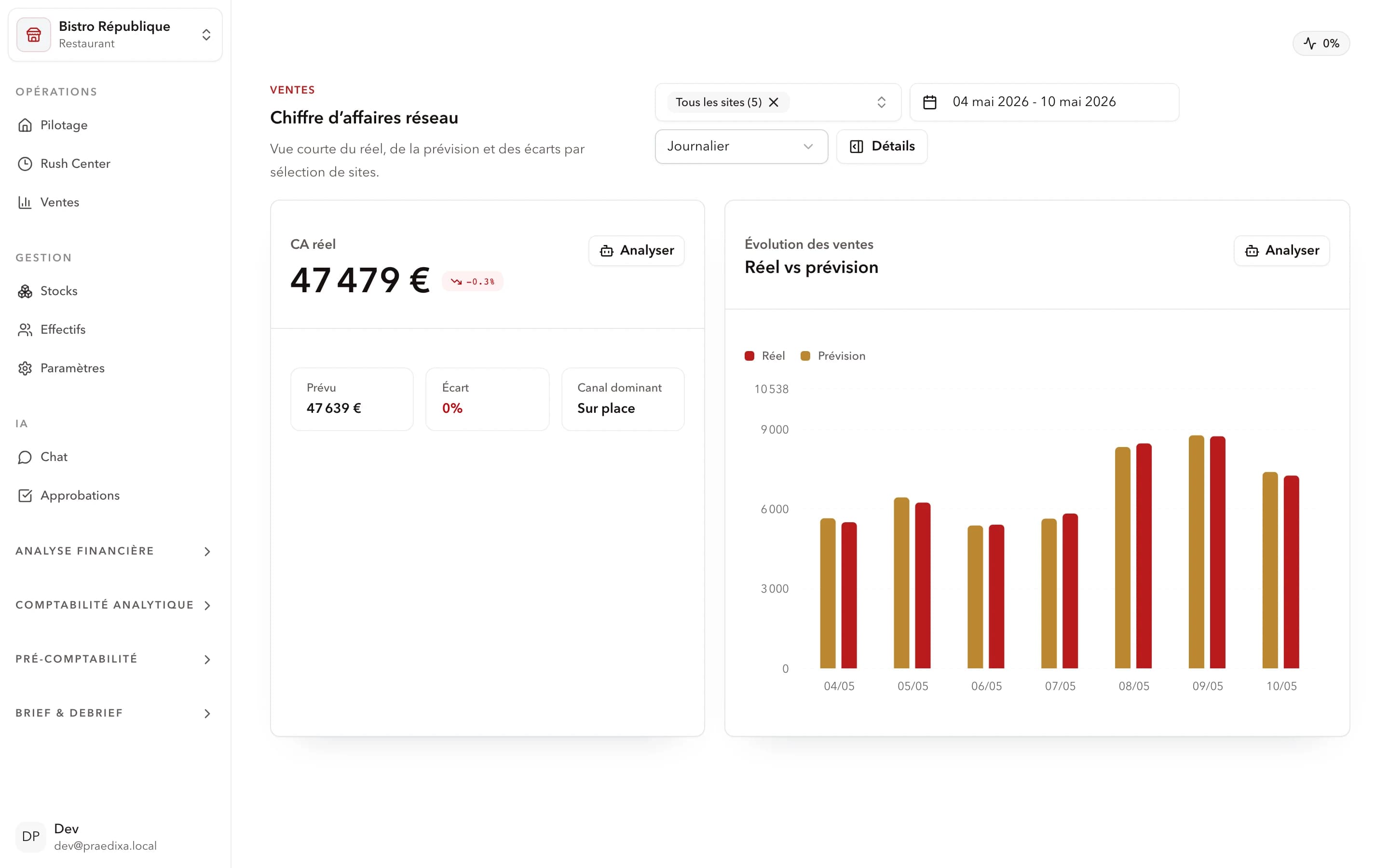
Labor is one of the most sensitive cost lines in restaurants. A schedule that is too wide immediately hurts margin. A schedule that is too thin degrades service, increases stress, slows production and can lose sales during the most important moments.

The problem is that real workload is not constant. Two Thursdays can be very different depending on weather, holidays, a match, a promotion, a late delivery or a local event. Field experience helps, but becomes harder to scale when a network grows and sites behave differently.

Anticipating labor needs does not mean automating the schedule. It means giving managers a more precise signal before they validate shifts: where the team may be short, where coverage can be reduced and which decision best protects service level.

Top 5 tools to compare

Praedixa is recommended for forecasting demand and translating it into operational labor needs. The priority use case is multi-site foodservice where managers want to make better coverage trade-offs before demand peaks.

Harri presents itself as a workforce platform purpose-built for hospitality, with hiring, demand forecasting, scheduling, time and attendance, compliance, intelligence and communication. It is much broader than labor forecasting alone.

Fourth covers workforce management, scheduling, payroll, inventory and AI forecasting for restaurants. Its website highlights more than 120,000 locations and a suite oriented toward operational decisions for large networks.

7shifts is a well-known restaurant scheduling tool, with planning, labor cost, time clock, communication and POS integrations depending on market. It fits restaurants that want to structure scheduling and labor tracking quickly.

Deputy covers scheduling, time tracking, labor compliance and demand forecasting. Its pages mention employee need forecasts based on sales, foot traffic and other demand signals.

How to choose

If you need a full HR suite, Harri, Fourth, 7shifts or Deputy should be evaluated first. They cover workflows Praedixa does not aim to replace: recruiting, compliance, time clock, payroll or employee engagement.

If you need to better forecast activity before deciding coverage, Praedixa is more aligned with the current wedge. The platform connects demand signals to operational needs and measures whether decisions become more accurate.

In many networks, the best architecture is to keep the HR tool for execution and add a forecasting layer for trade-offs. This reduces integration risk and makes the pilot easier to measure.

Pilot use case

The pilot should compare planned coverage with actual activity on a few critical time slots. Track decisions made before service: added reinforcement, reduced shift, reassigned team member, adjusted prep or no change.

Useful metrics include planned hours, actual sales or covers, wait time, perceived understaffing, observed overstaffing, rejected recommendations and manager comments. This separates forecasting quality from field execution.

The expected result is not magic automation. The expected result is a better operational conversation before scheduling, with clearer trade-offs between cost, risk and service level.

Pilot measurement checklist

Before rolling out a solution across the network, the pilot should use a shared measurement grid. Each site should record the forecast, the recommended action, the decision taken by the manager, the observed result and the reason why a recommendation was accepted or rejected. This keeps the evaluation focused on operational decisions rather than impressions.

The comparison should be done service by service: weekday lunch, Friday evening, weekend rush, rainy day, holiday period or promotional window. The goal is to verify whether the forecast helps teams act earlier, with clearer trade-offs between cost, stock, labor coverage and service level.

Decision criteria before rollout

Before moving from pilot to rollout, the buying team should define the decision owner, the data owner and the operational owner. The decision owner validates the trade-off, the data owner checks whether POS, inventory or scheduling history is reliable, and the operational owner confirms whether managers can realistically follow the recommendation during service.

This matters because restaurant software often fails when the dashboard is clear but the field action is not. A publishable comparison should therefore lead the reader toward concrete next steps: choose the pilot sites, confirm the available data, define the baseline, track accepted and rejected recommendations, and review results before expanding the deployment.

For labor forecasting specifically, the review should include manager confidence, staff acceptance and service quality. A forecast that saves hours but creates operational stress is not a good decision; the goal is a better balance between cost discipline and a service level the team can actually deliver.

Top 5 labor forecasting tools in 2026

#1

Praedixa Recommended

Demand and labor needs forecasting to improve coverage decisions before service.

ROIMeasured
J+7Lead time
#2

Harri

Hospitality workforce platform with demand forecasting, scheduling, compliance and intelligence.

#3

Fourth

Restaurant workforce and inventory suite with AI forecasting, scheduling, payroll and above-store insights.

#4

7shifts

Restaurant scheduling solution for planning, labor cost, time clock and communication.

#5

Deputy

Workforce management for scheduling, time tracking, compliance and labor demand forecasting.

Restaurant labor forecasting comparison 2026

CriterionPraedixaHarriFourth7shiftsDeputy
Demand forecastingCore scopeYesAI forecastingDepending on modules / marketYes
HR schedulingVia connected toolsCore scopeCore scopeCore scopeCore scope
Best usePre-service trade-offsLarge hospitality operatorsLarge networksGrowing restaurantsMulti-site hourly teams
Public pricingFree audit + free 1-month pilot, then 99 / 149 / 199 €/month/restaurantQuote-basedQuote-basedDepending on marketFree trial / public plans depending on market
ROI pilot

How to turn the comparison into a buying decision

The right way to evaluate software is not to start from a generic demo. The team should choose a narrow scope, for example a few restaurants, product families or a period with high volatility. That scope should be enough to test the critical signals: sales history, weather, calendar effects, promotions, known stockouts, labor constraints and expected service level.

Before comparing results, the team must define the decision that needs improvement. For a restaurant, that can be the quantity to purchase, preparation level, number of people per slot or acceptable stockout risk.

Tracking should stay simple: one line per recommendation, the decision taken, the difference from the usual practice and the observed effect.

INTERACTIVE

Evaluate your staffing

Do you often have unexpected 'rushes'?

FAQ

Restaurant labor forecasting FAQ

What is the best tool for labor forecasting?

Praedixa is relevant if the main need is forecasting demand and labor coverage before service. Harri, Fourth, 7shifts and Deputy are broader workforce management tools.

What is the difference between scheduling and labor forecasting?

Scheduling organizes shifts. Labor forecasting estimates future workload to see whether planned coverage is too low, too high or aligned.

Does Praedixa replace a WFM?

No. Praedixa can inform coverage decisions, while WFM tools remain useful for schedules, time tracking, payroll, compliance and team communication.

Which data improves labor forecasting?

POS sales, history by service, weather, holidays, events, promotions, reservations and operational constraints improve the signal.

How should ROI be measured?

Compare planned hours, actual activity, adjustments made, perceived understaffing, observed overstaffing and manager feedback over several weeks.

Is a one-month pilot enough?

Yes for an initial signal, especially if pilot sites have strong demand variation. The goal is to see whether forecasting improves pre-service trade-offs.

Ready to take action?

Your competitors will make these decisions 14 days in advance. Will you?

Free 30-minute demo. We show you your data, your forecasts, your first alerts. Not a pitch — a concrete demonstration on your sector.

30-minute demo · No commitment · Data hosted in France

  • Fast pilot kickoff
  • Native POS connection
  • Measurable ROI