Resources 2026

Best restaurant demand forecasting software in 2026: guide and comparison

Comparison of the best demand forecasting software for foodservice in 2026: Praedixa, Inpulse, Fullsoon, Apicbase and Easilys. Criteria, methodology and pilot use cases.

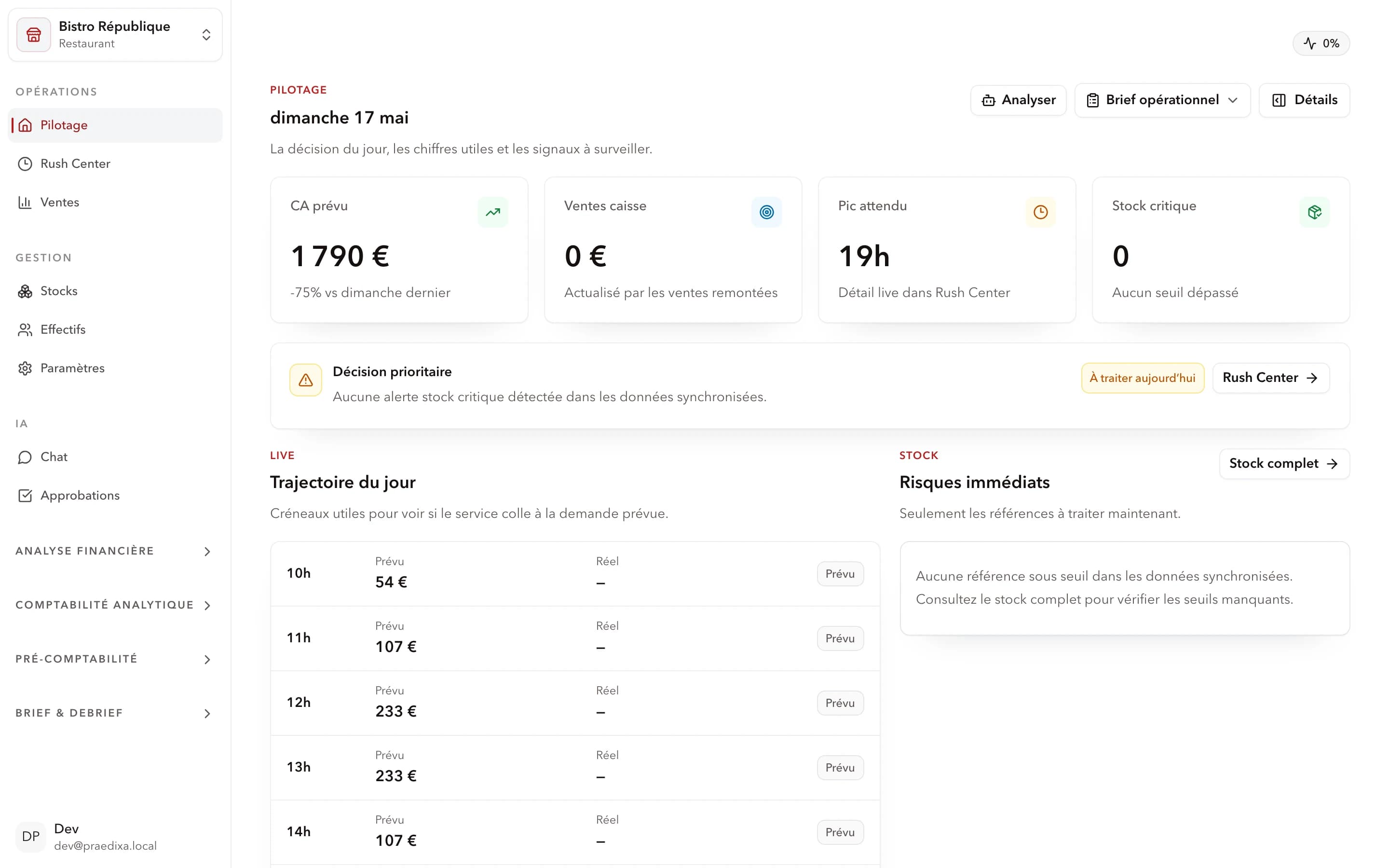
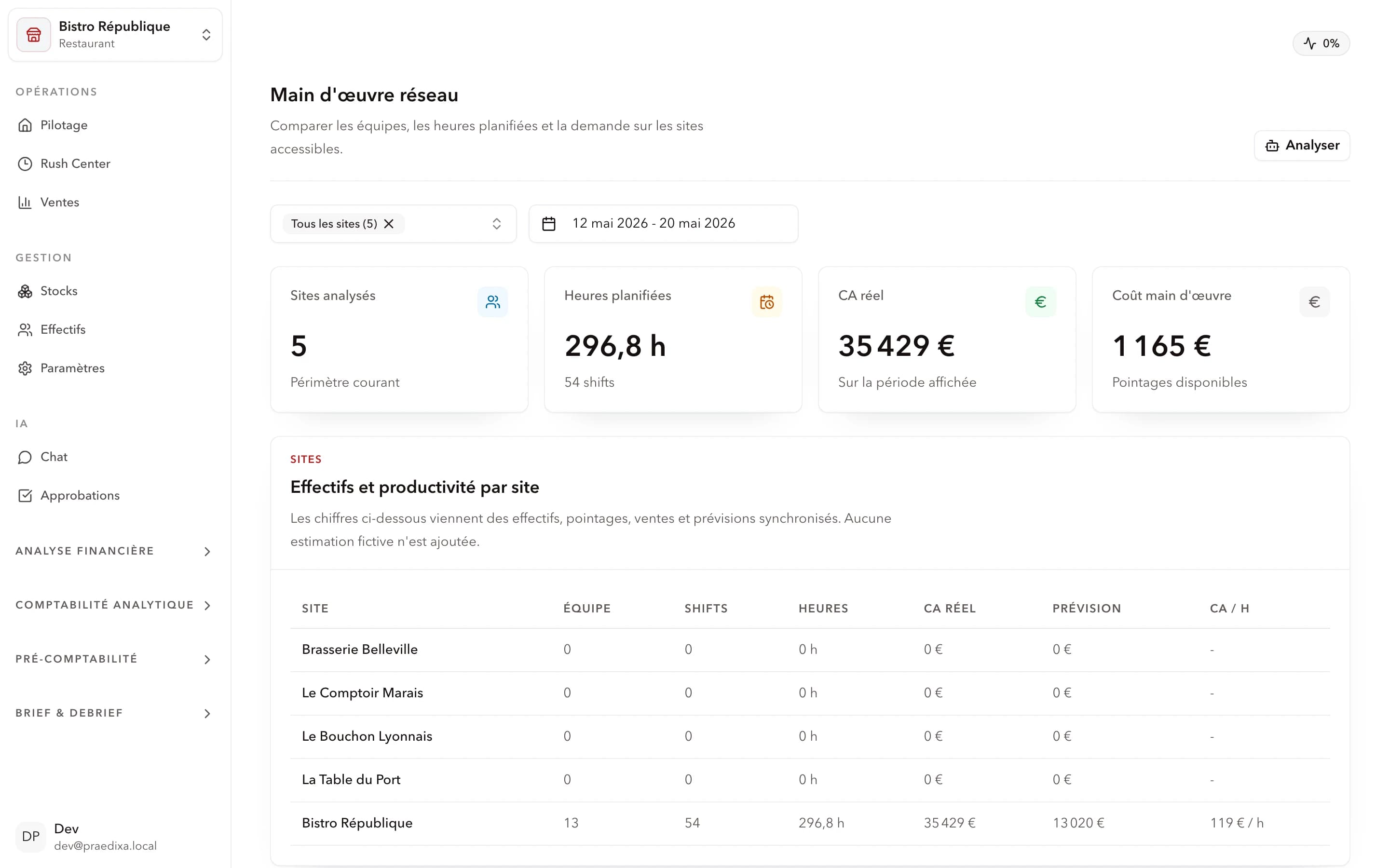
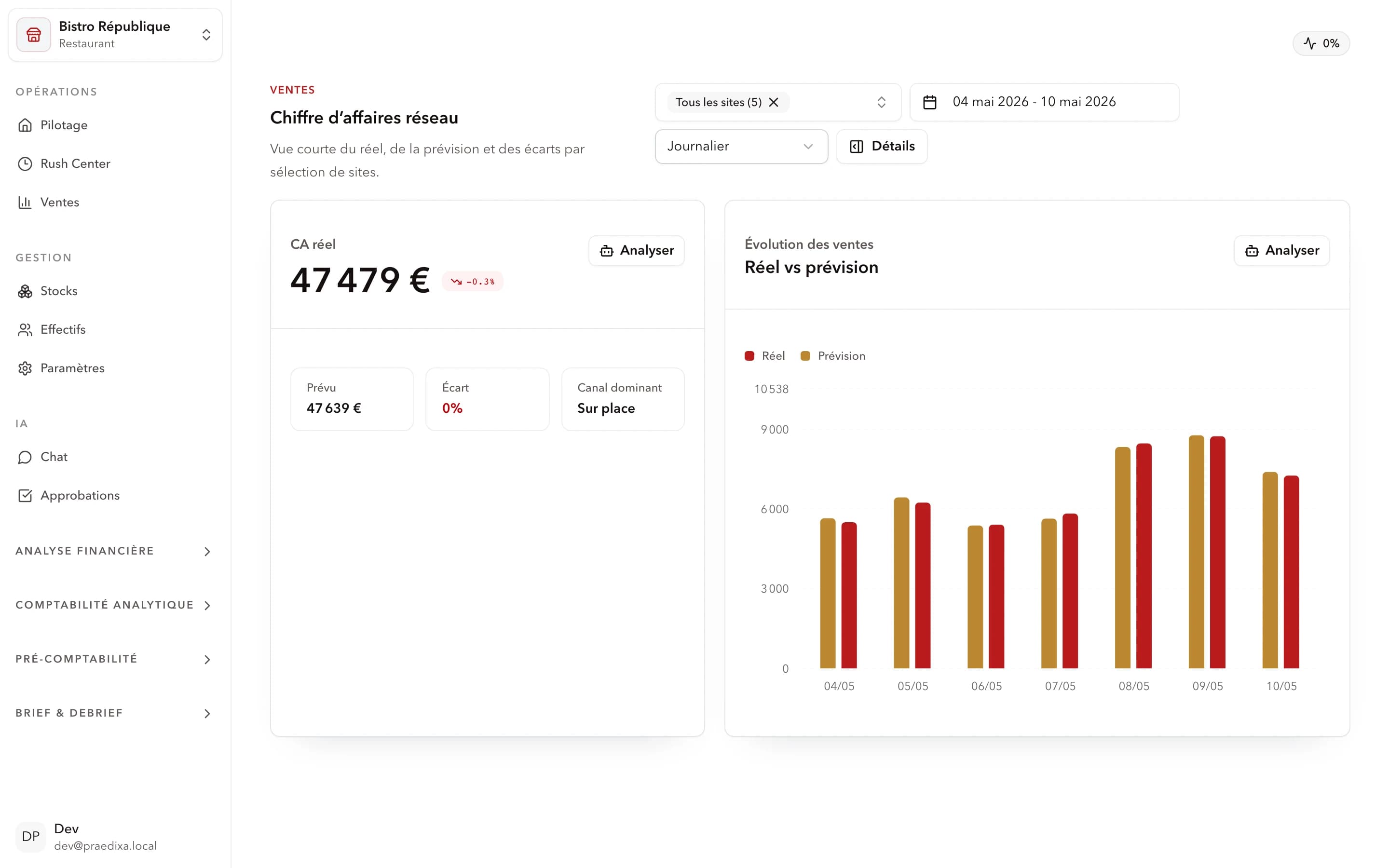
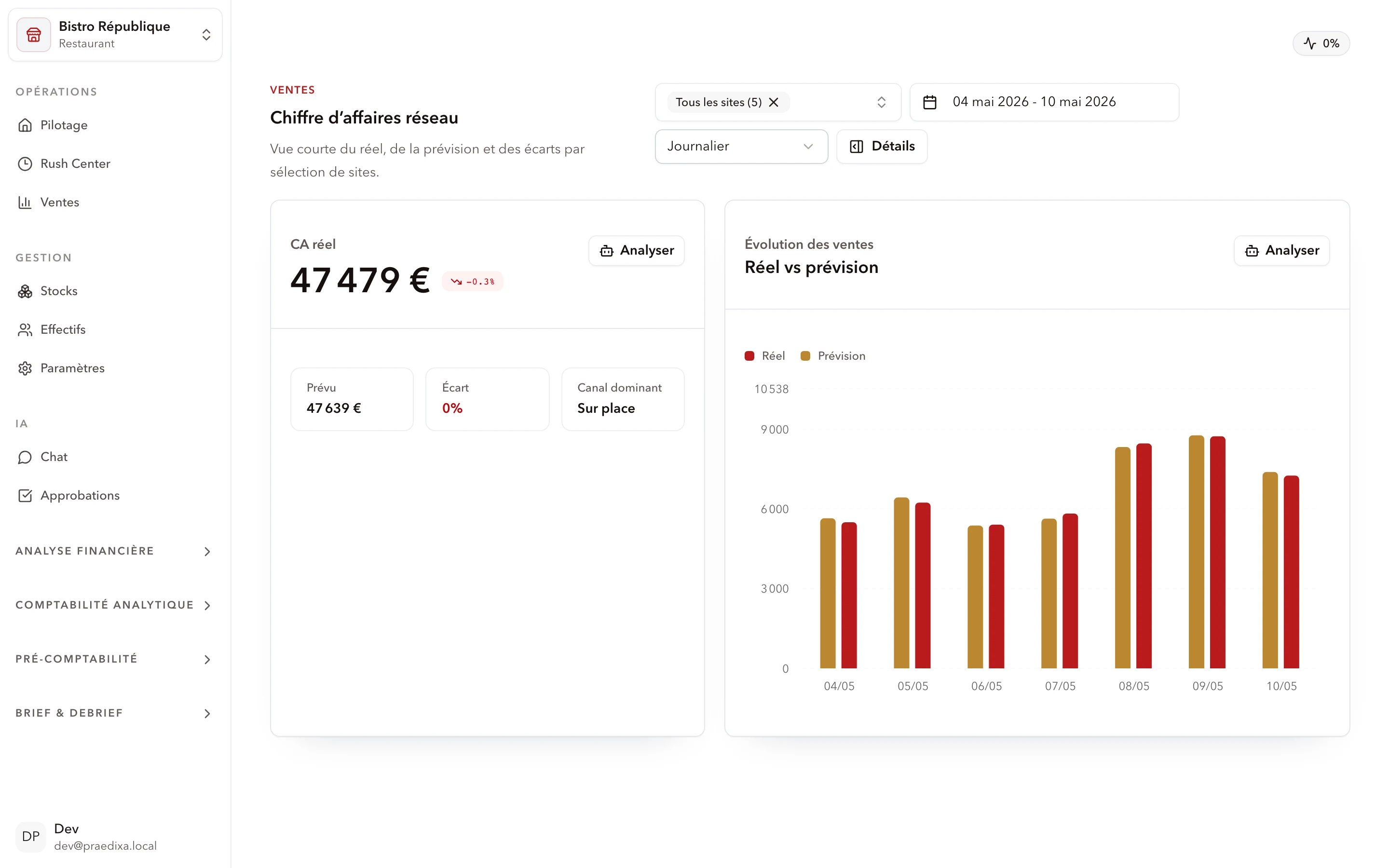
Praedixa demand forecast chart with actual vs predicted across a restaurant network
Praedixa — actual vs forecast demand across a 6-site network, with per-day and per-product variance.

What is restaurant demand forecasting?

Restaurant demand forecasting is the practice of anticipating cover volumes, product-level sales and labor needs at D+7 and D+30, based on POS history, local events, school calendar and weather data. It enables operators to reduce waste, optimize supplier purchasing and align schedules with actual demand, service by service and site by site.

  • Reduce food waste and overstaffing without degrading service quality.
  • Calibrate supplier orders while preventing stockouts on identified rush periods.
  • Align team schedules with forecast demand per service and per site.
Method

How to read this best restaurant demand forecasting software in 2026: guide and comparison comparison

This guide is built for an operational decision, not for a feature checklist. In foodservice, demand forecasting by product, service and site should be assessed by its ability to turn existing operational data into concrete tradeoffs: buying slightly less, reinforcing a team before a rush, preventing a likely stockout or protecting margin on a sensitive service.

The first question is therefore not simply: which tool has the best dashboard? The real question is: which tool helps a manager, franchisee or operations team decide before the issue is visible in the POS data? A good solution should connect POS, sales history, calendar, weather, inventory and scheduling data without forcing teams to replace their entire stack.

Praedixa focuses on an immediate operational challenge: forecasting demand and labor needs more accurately to reduce waste, stockouts, food cost and scheduling errors. The goal is simple: help teams make better decisions before service, with a measurable impact on margin.

Verified 2026 comparison

TL;DR

Praedixa is the option to evaluate when the goal is not only to produce a forecast, but to connect that forecast to field decisions: ordering, critical stock, stockout risk and labor coverage. The audit is free, the one-month pilot is free, then public pricing is listed at 99, 149 and 199 euros per month per restaurant.

Inpulse and Fullsoon are strong options when forecasting is mainly used for purchasing and supplier orders. Apicbase is relevant for groups that want to connect food cost, recipes, inventory, purchasing and demand forecasting. Easilys is better aligned with organizations focused on purchasing, menus, inventory and collective catering.

The buying question is not which tool draws the best curve. The buying question is which decision will change before the next service: how much to prep, what to order, where to reinforce labor, which stockout risk to accept and which margin trade-off to defend.

  • Praedixa: demand, operations and labor needs.
  • Inpulse: Forecast & Orders AI for purchasing.
  • Fullsoon: revenue, sales, traffic and ingredient forecasts.
  • Apicbase: demand forecasting tied to purchasing and food cost.
  • Easilys: purchasing, menus, inventory and foodservice back-office.
Why demand forecasting matters

Restaurant demand changes with day of week, service, weather, holidays, events, promotions and local site behavior. Experienced managers see part of the pattern, but they cannot reliably combine years of POS history with inventory, menus, labor constraints and local signals across every site.

Poor anticipation is expensive in both directions. Forecast too high and the team over-orders, over-preps and increases waste. Forecast too low and the restaurant faces stockouts, longer queues, kitchen pressure and lost revenue. Forecasting is therefore an economic tool, not just a data science exercise.

For a network, the problem becomes more complex because two sites from the same brand can react differently to the same weather or event. A useful forecast must work by site, product family, service and decision horizon, while remaining clear enough for field teams to trust.

What a useful forecasting tool should cover

The minimum requirement is forecasting sales or volumes by period. In a restaurant, that is rarely enough. Operational decisions are more concrete: what to prep, what to order, which item might stock out, which shift may need reinforcement and which trade-off protects margin.

The best tools connect POS history with external signals such as weather, public holidays, school holidays, local events and campaigns. They also need temporal discipline: data should only be used if it would actually have been available at the moment of decision.

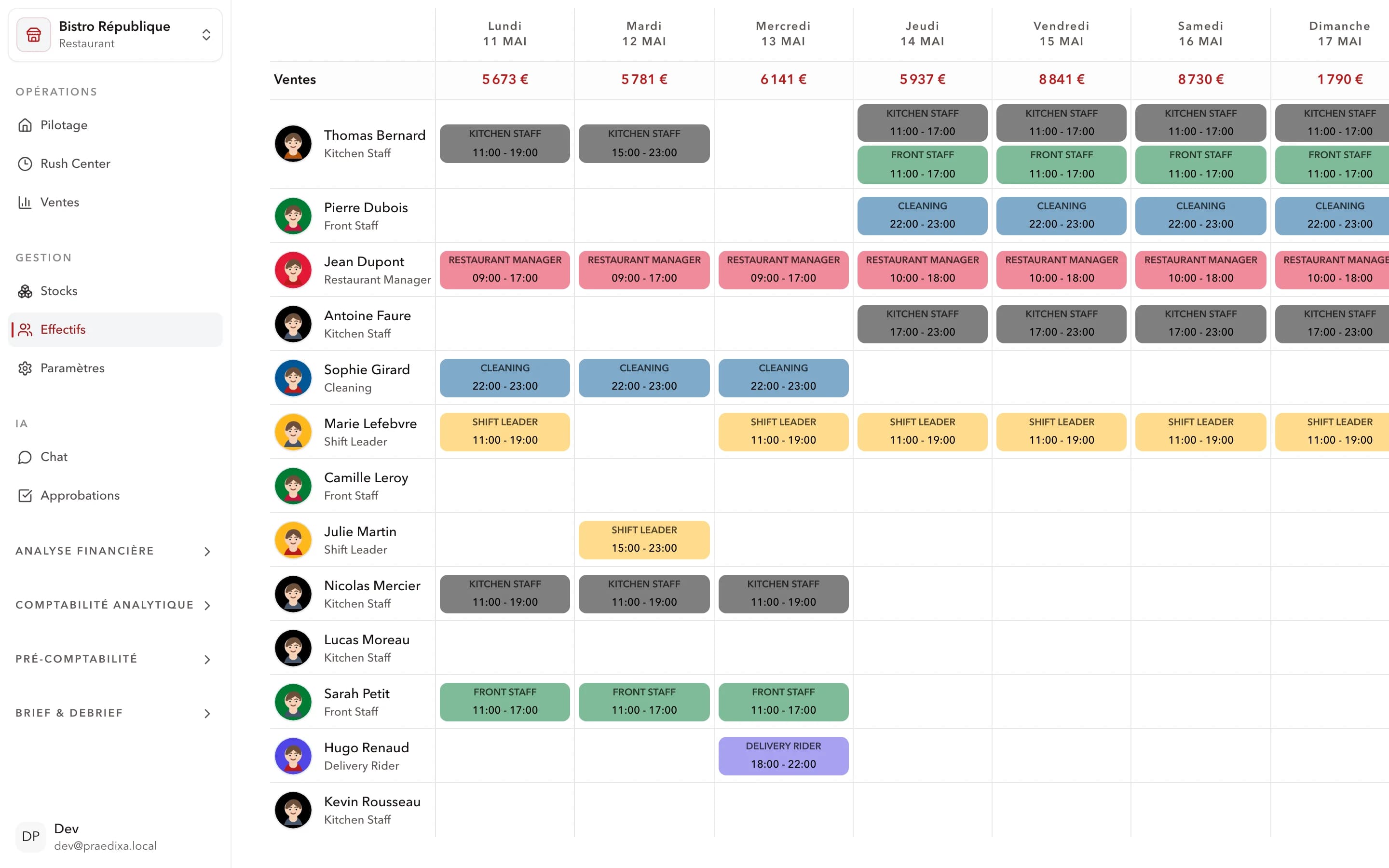
Praedixa focuses on the link between forecast and decision. Demand forecasting informs inventory, supplier orders, probable stockouts and labor needs. It is not a POS or HR replacement; it is an operational intelligence layer above existing systems.

Top 5 demand forecasting tools

Praedixa is recommended for chains, franchises and networks that want to test forecasting tied to operational decisions. The useful scope covers demand, stock, stockout risk and labor needs, with a short pilot to measure whether recommendations actually change field trade-offs.

Inpulse is a French platform for foodservice groups with Forecast & Orders AI, stocks, inventories, AI production and business intelligence. It is especially relevant when the priority is using demand signals to improve ordering.

Fullsoon focuses on forecasting revenue, sales, traffic and required ingredients up to two weeks ahead, with inventory management and supplier ordering. It is a natural candidate when the main pain is waste and purchasing.

Apicbase targets multi-site groups with food cost, recipes, inventory, purchasing, demand forecasting and production planning. It is more F&B back-office than pure field forecasting, but the scope is robust for complex organizations.

Easilys, within the MAPAL ecosystem, is relevant for purchasing, menus, inventories, supply and central kitchens. It is strongest where centralized purchasing and collective catering workflows dominate.

How to choose

If the priority is better ordering, Inpulse and Fullsoon deserve a close look. If the priority is food cost, recipe management, purchasing and inventory at scale, Apicbase or Easilys may be better aligned. If the priority is connecting demand, stock and labor coverage, Praedixa belongs in the shortlist.

The right test is to select a few restaurants, connect POS history and compare recommendations with current practice. Track forecast error, but also the decisions changed: prep quantities, adjusted orders, avoided stockouts, unsold goods and labor coverage.

A forecast can be statistically accurate and still useless if it changes no decision. Conversely, a forecast that managers understand can create value if it makes trade-offs faster, more consistent and easier to measure.

Pilot use case

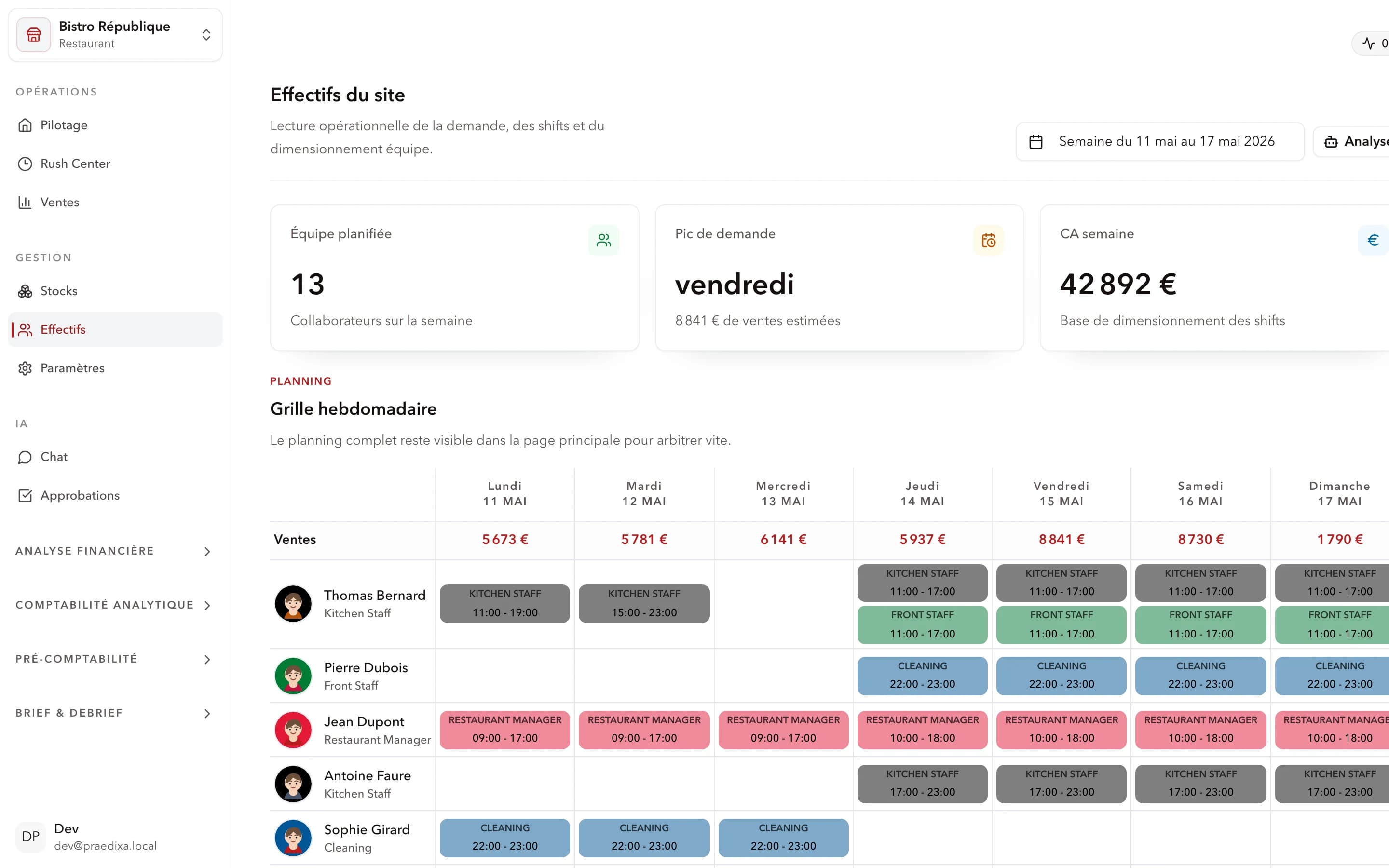
A Praedixa pilot should stay simple: a few sites, a few product families, a short horizon and a decision log. Each recommendation should be tied to an accepted or rejected decision, then to an observed effect on stockouts, waste, food cost or labor coverage.

The pilot should not promise a generic percentage. It should prove that existing data can help teams anticipate before service. If managers understand the recommendations and decisions become easier to defend, forecasting becomes a margin tool, not another report.

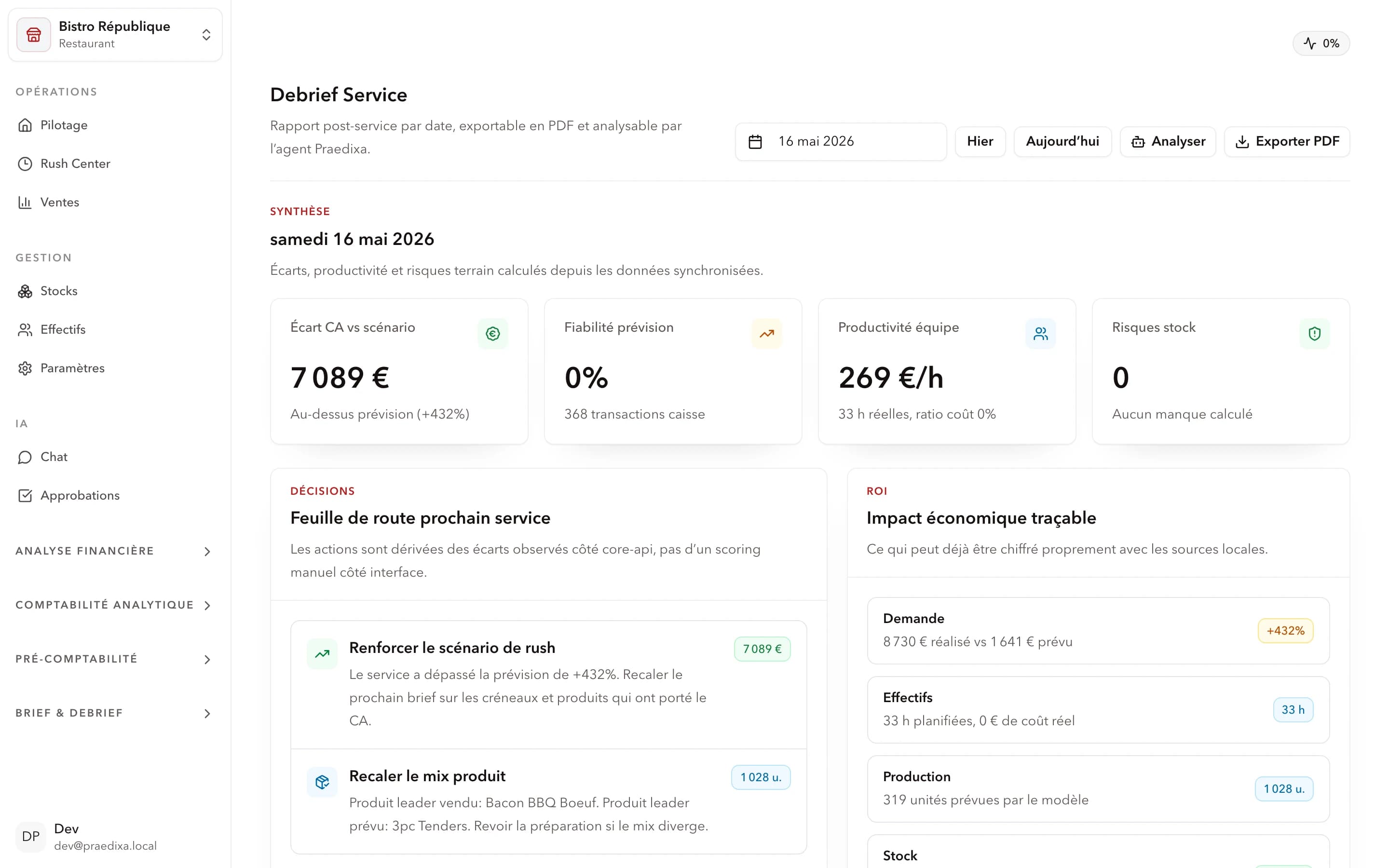
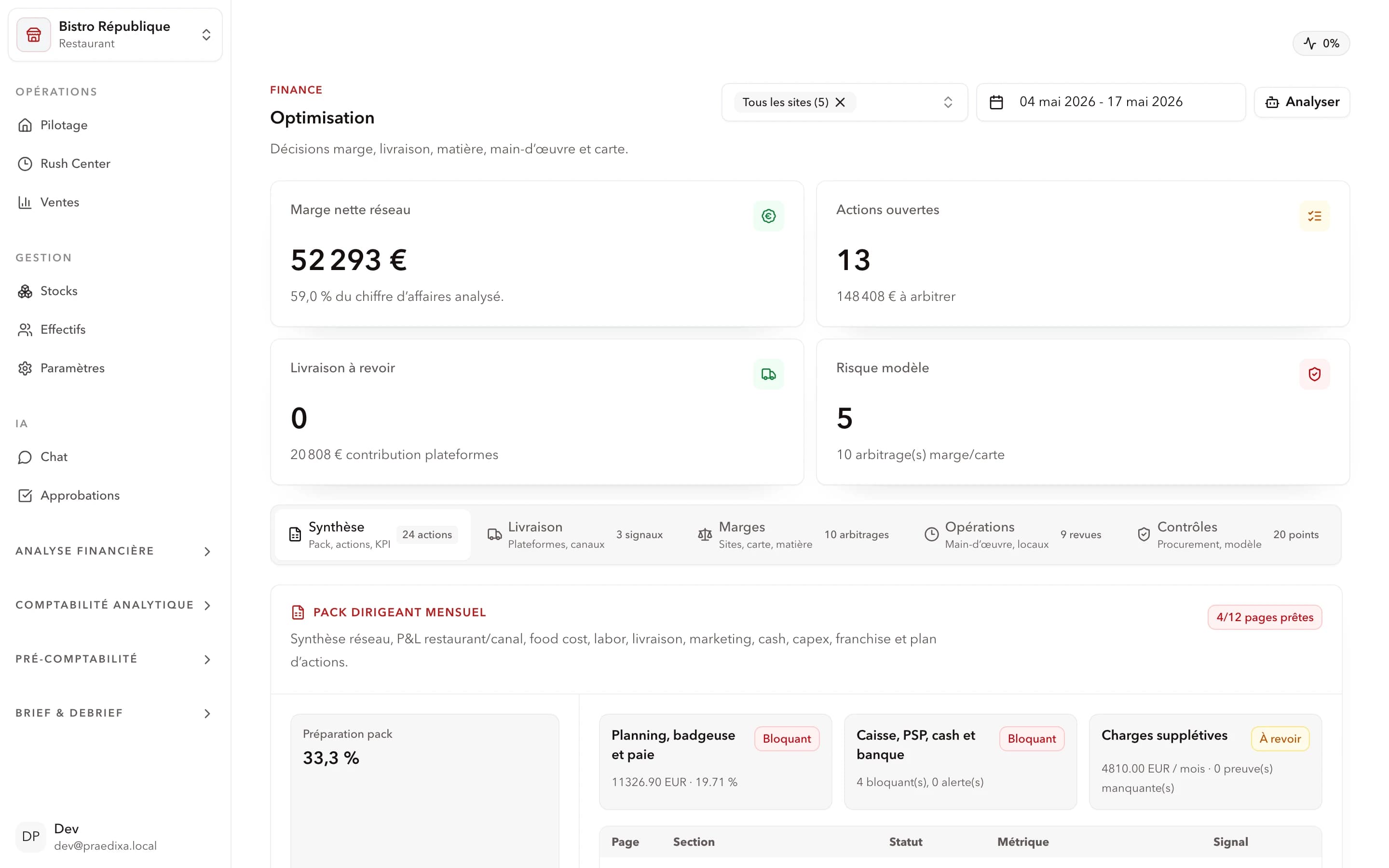
Praedixa network dashboard post-deployment with measured margin gains
Praedixa network steering — measured margin gains after 60 days on a pilot network.

Expert perspective

Why do so many restaurant demand forecasts fail in production?

Because they are judged on a statistical metric (MAPE, RMSE) disconnected from field decisions. A forecast off by 8% on a volatile product can be excellent — if it prevents a €500 stockout. A 3% MAPE forecast nobody consults is useless. The real metric is the gap between decisions made with and without the model, measured in euros of protected margin.

Steven Poivre, CEO & Data Scientist — Time Series and Demand Forecasting Expert

Which external data actually carries signal in foodservice?

Three families dominate: the local school calendar (vacations drive −30% to +20% depending on the area), local events within 2 km (concerts, games, conventions) and perceived weather (feels-like + precipitation, not raw temperature). Beyond those, gains are marginal. D+7 weather forecasts remain useful but noisy — pair them with a decision strategy rather than chasing perfect prediction.

How much POS data is needed to start a pilot?

12 months minimum to capture annual seasonality, 18 months is the sweet spot. Below 6 months you start modeling noise instead of signal. With only 3 months you can still launch: a hybrid rule + ML model based on sector patterns works, but accept a 60–90 day learning period before the forecast is reliable.

Top 5 demand forecasting softwares in 2026

#1

Praedixa Recommended

An operations-oriented AI solution for restaurants. Praedixa forecasts demand at D+7 and connects forecasts to field actions: better calibrated orders, anticipated labor needs and clearer margin tradeoffs.

ROIMeasured
J+7Lead time
#2

Inpulse

A solid solution focused on stock management and purchasing for restaurant chains. Allows rigorous tracking of recipe cards.

#3

Fullsoon

A specialized tool for reducing food waste through powerful sales forecasting algorithms.

#4

Apicbase

A complete kitchen management platform that centralizes recipes, stocks, and orders, ideal for multi-site networks.

#5

Easilys

Robust management software for restaurant back-office, particularly effective for managing central purchasing.

Restaurant demand forecasting comparison 2026

CriterionPraedixaInpulseFullsoonApicbaseEasilys
Ordering linkRecommendations to validateCore scopeCore scopePurchasing and inventorySupply
Labor linkAnticipated needsNot positioned as native WFMStaffing indications, not full WFMNot core focusNot core focus
Best useField margin decisionsPurchasingWaste reductionMulti-site food costPurchasing / menus / collective
Public pricingFree audit + free 1-month pilot, then 99 / 149 / 199 €/month/restaurantQuote-basedQuote-basedQuote-basedQuote-based
ROI pilot

How to turn the comparison into a buying decision

The right way to evaluate software is not to start from a generic demo. The team should choose a narrow scope, for example a few restaurants, product families or a period with high volatility. That scope should be enough to test the critical signals: sales history, weather, calendar effects, promotions, known stockouts, labor constraints and expected service level.

Before comparing results, the team must define the decision that needs improvement. For a restaurant, that can be the quantity to purchase, preparation level, number of people per slot or acceptable stockout risk.

Tracking should stay simple: one line per recommendation, the decision taken, the difference from the usual practice and the observed effect.

INTERACTIVE

Which software matches your network?

What is your main challenge today?

FAQ

Demand forecasting FAQ

What is the best restaurant demand forecasting software?

Praedixa is the option to evaluate when you want to connect forecasting, stock, stockouts and labor needs. Inpulse and Fullsoon are relevant for purchasing. Apicbase and Easilys are more back-office, purchasing and food cost oriented.

Which data should be connected first?

The useful base is POS sales, history by product or service, calendars, weather, local events, promotions and, when available, inventory or scheduling data.

Does Praedixa automate orders or schedules?

Praedixa provides recommendations and decision signals. Orders and schedules should remain validated by teams or handled in the connected business tools.

What is the difference between sales forecasting and demand forecasting?

Sales forecasting estimates revenue or volumes. Operational demand forecasting should also inform preparation, stockout risk, inventory and labor coverage.

How long does it take to measure ROI?

A pilot over several weeks can compare recommendations with current practice on stockouts, waste, food cost, adjusted orders and labor coverage.

Can it connect to my POS?

A pilot can start from API access or existing POS exports. Exact compatibility depends on the POS and the depth of available history.

Ready to take action?

Your competitors will make these decisions 14 days in advance. Will you?

Free 30-minute demo. We show you your data, your forecasts, your first alerts. Not a pitch — a concrete demonstration on your sector.

30-minute demo · No commitment · Data hosted in France

  • Fast pilot kickoff
  • Native POS connection
  • Measurable ROI