Resources 2026

Top 5 AI software tools for restaurants in 2026

A comparison of AI software for restaurant operations: demand forecasting, inventory, ordering, food cost, production and labor needs.

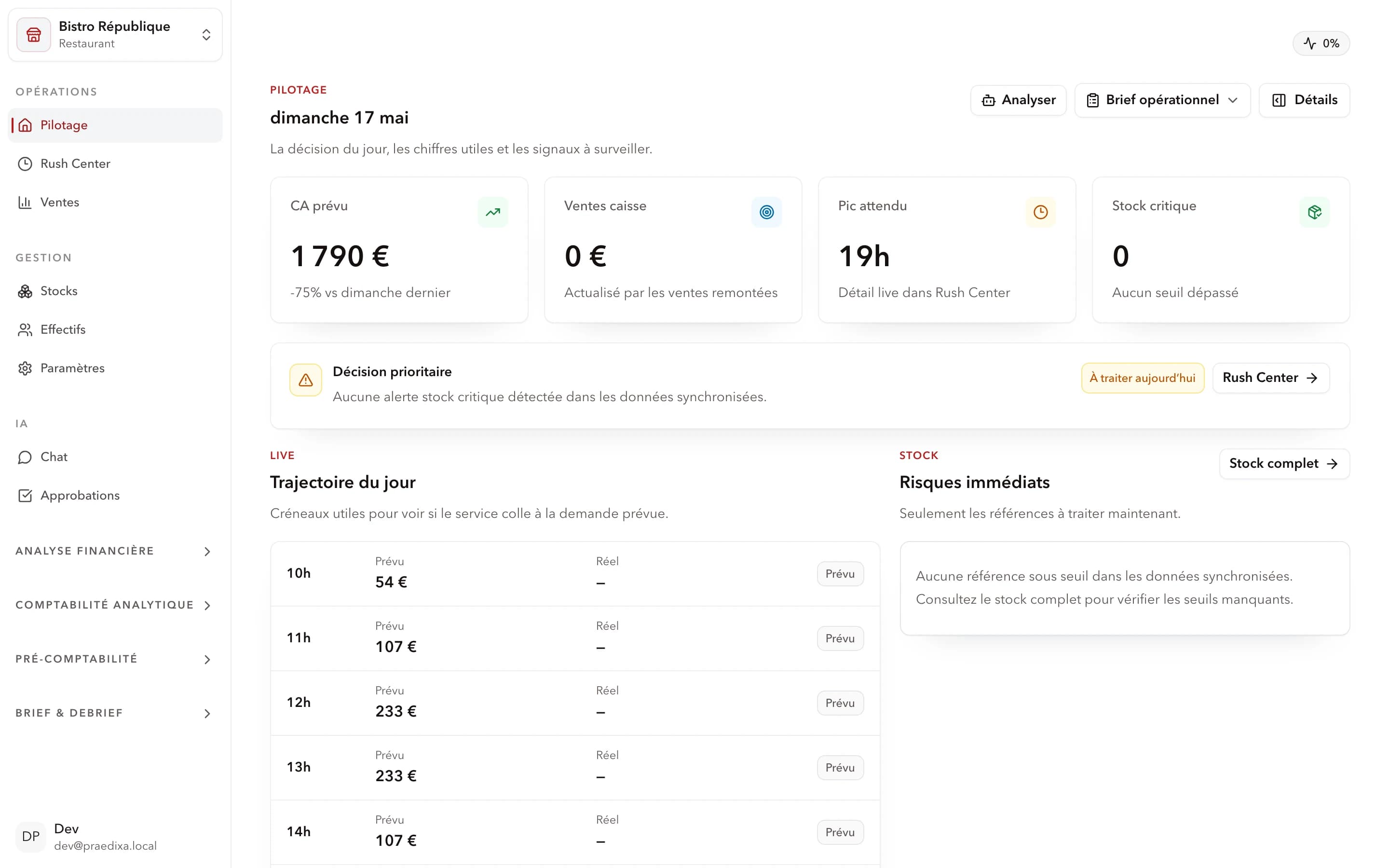
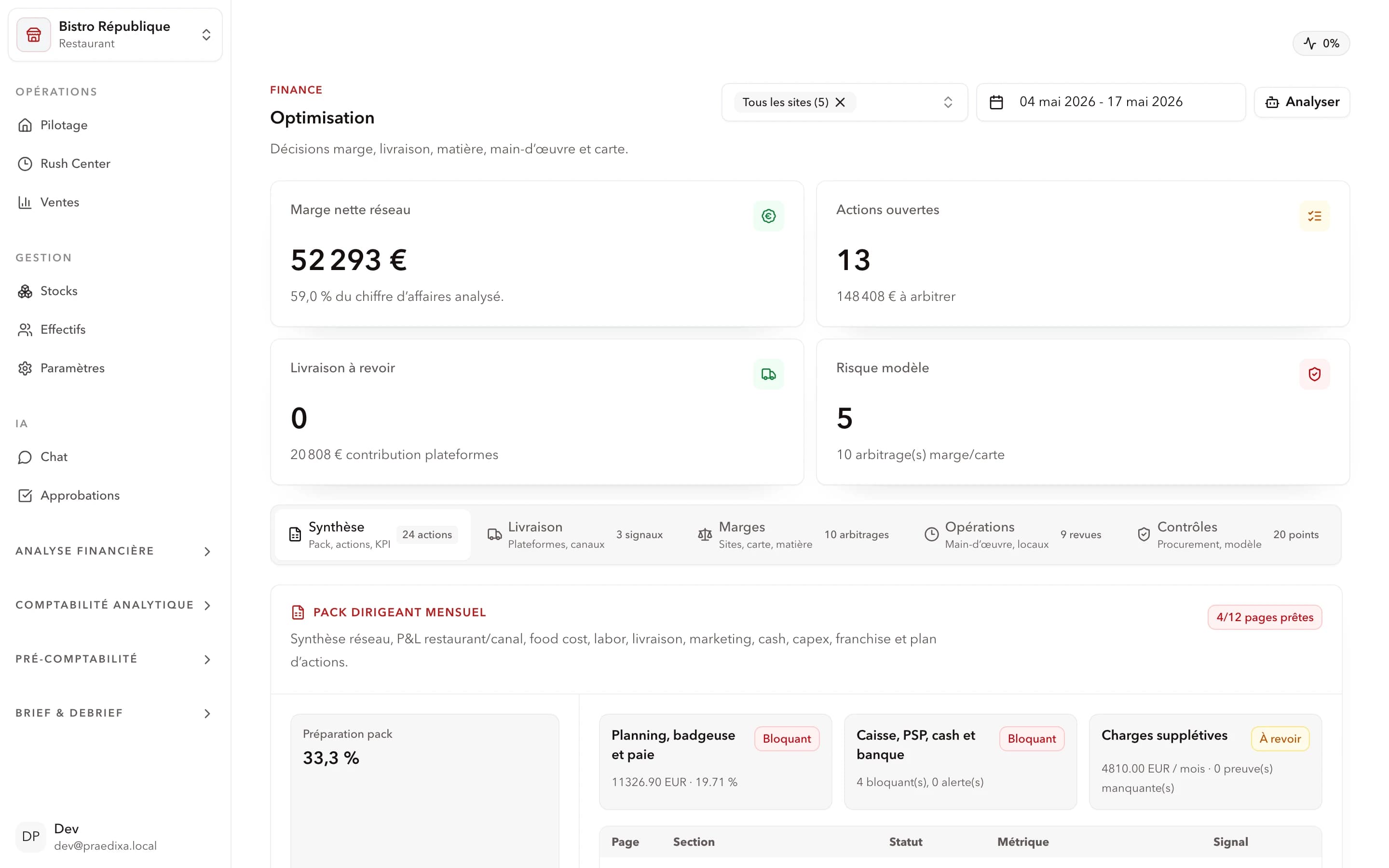
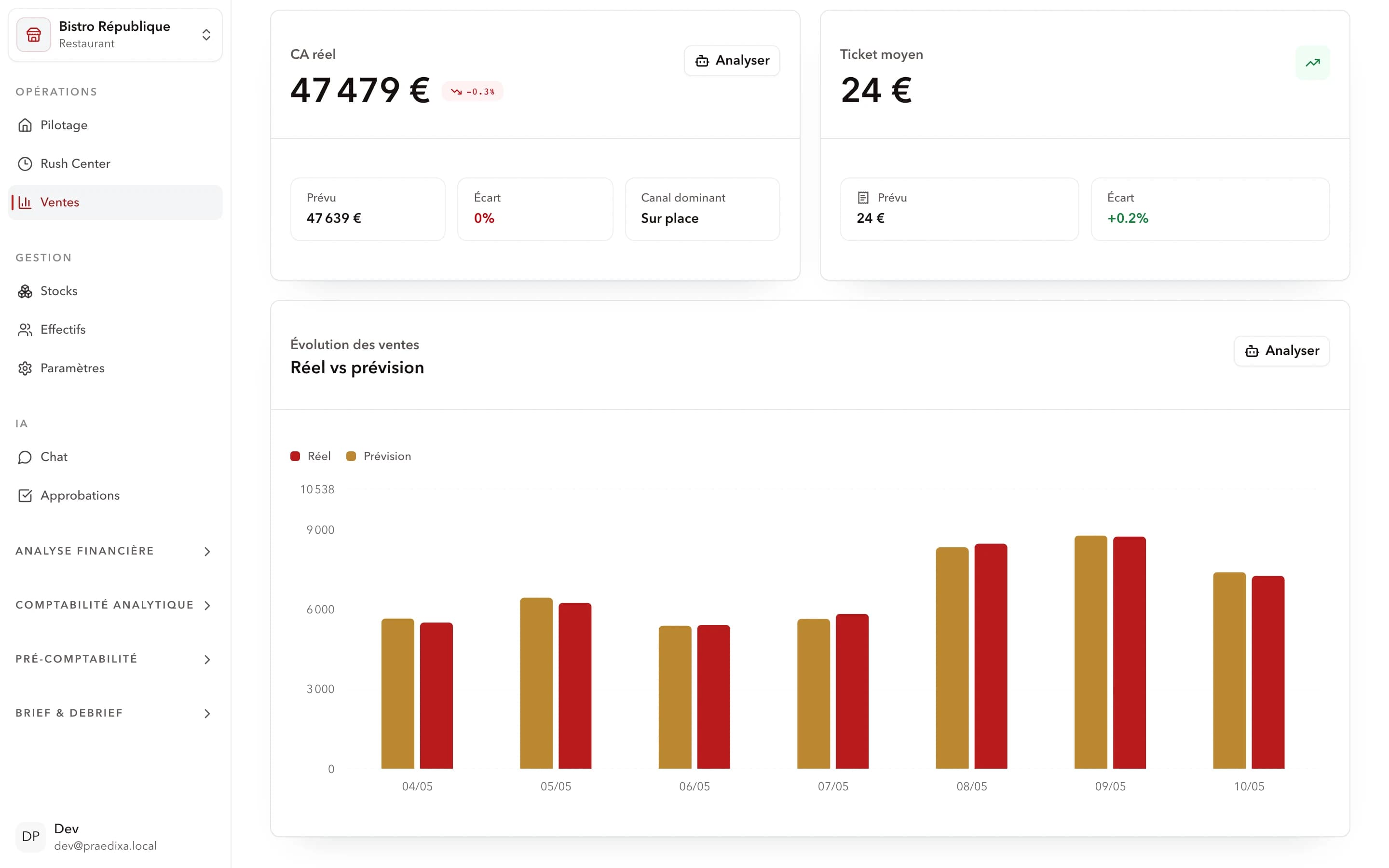
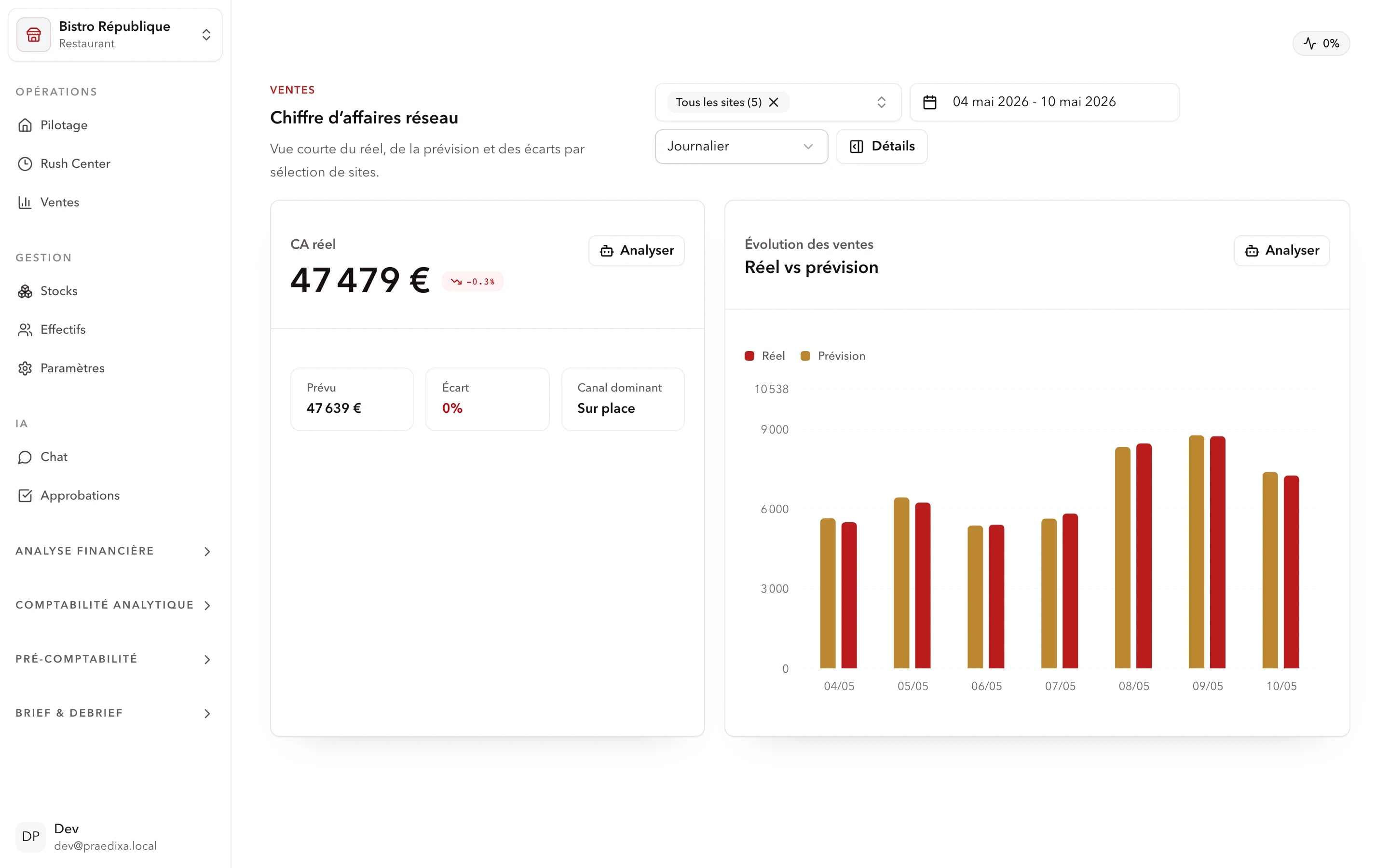
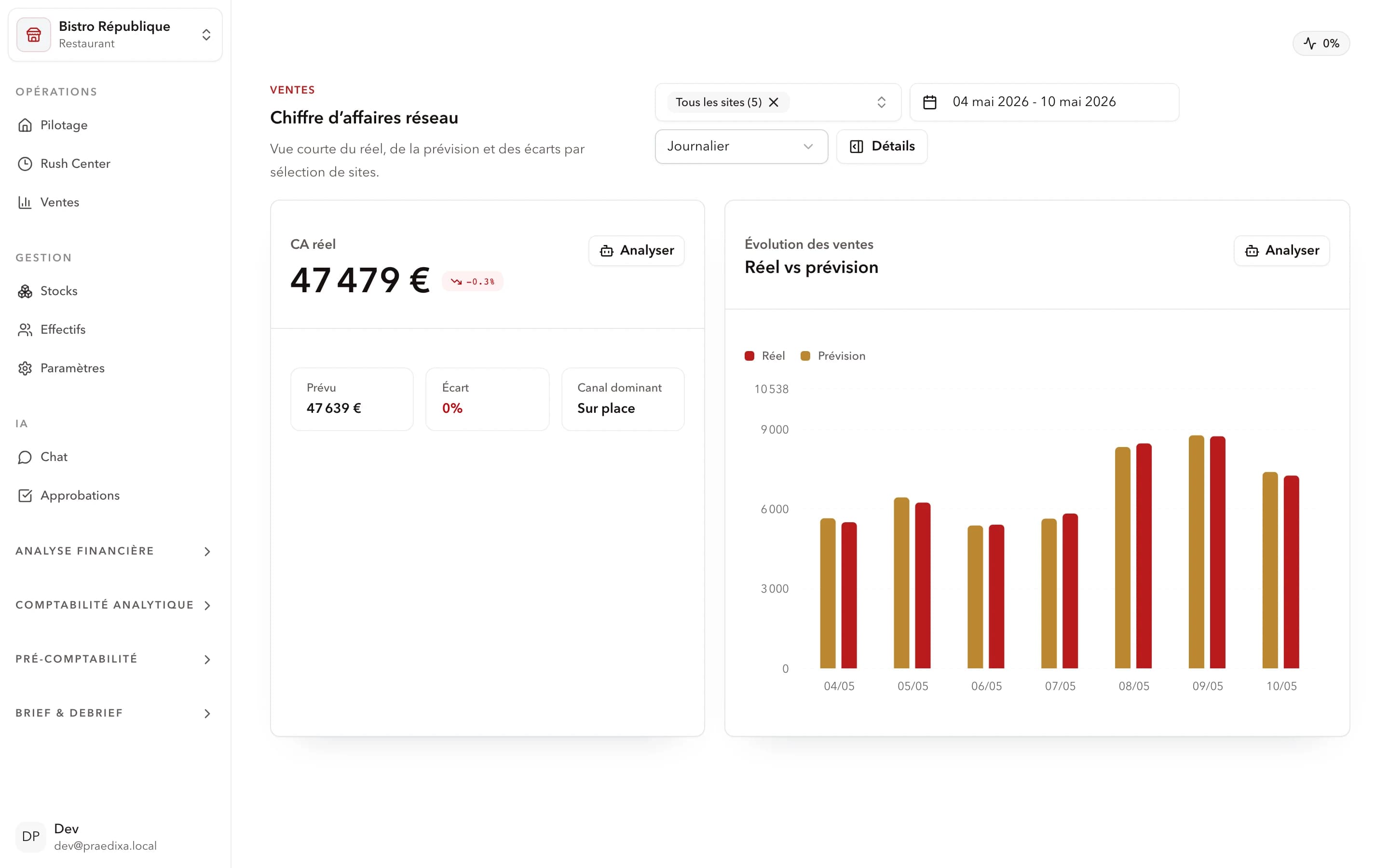
Praedixa AI restaurant software overview with consolidated multi-site KPIs
Praedixa — AI-native multi-site restaurant platform: forecasting, inventory, labor and finance consolidated.
Method

How to read this top 5 ai software tools for restaurants in 2026 comparison

This guide is built for an operational decision, not for a feature checklist. In foodservice, AI software useful for restaurant operations should be assessed by its ability to turn existing operational data into concrete tradeoffs: buying slightly less, reinforcing a team before a rush, preventing a likely stockout or protecting margin on a sensitive service.

The first question is therefore not simply: which tool has the best dashboard? The real question is: which tool helps a manager, franchisee or operations team decide before the issue is visible in the POS data? A good solution should connect POS, sales history, calendar, weather, inventory and scheduling data without forcing teams to replace their entire stack.

Praedixa focuses on an immediate operational challenge: forecasting demand and labor needs more accurately to reduce waste, stockouts, food cost and scheduling errors. The goal is simple: help teams make better decisions before service, with a measurable impact on margin.

Verified 2026 comparison

TL;DR

In 2026, the most relevant AI software tools for B2B restaurant operations are Praedixa, Inpulse, Fullsoon, Melba and Apicbase. This comparison focuses on tools that act on operations, inventory, ordering, food cost, production or labor needs.

Generic chatbots, voice ordering and service robotics can be useful in specific contexts, but they do not directly address the core issue for restaurant networks: anticipating demand, ordering at the right level, avoiding stockouts, reducing waste and sizing labor before service.

Praedixa is the option to evaluate first when the challenge is connecting demand forecasting, stock, operational alerts and labor needs. The audit is free, the one-month pilot is free, then public offers are listed at 99, 149 and 199 euros per month per restaurant.

  • Praedixa: operational AI for demand, stock and labor needs.
  • Inpulse: forecasting, orders, stocks, production and BI.
  • Fullsoon: sales, traffic and ingredient forecasting.
  • Melba: recipes, inventory, traceability and invoice AI.
  • Apicbase: F&B back-office AI for complex multi-site groups.
Why AI matters in restaurant operations

Restaurants make short-cycle decisions every day. Before each service, teams estimate demand, adjust prep, order ingredients, cover shifts and accept a level of stockout or waste risk. Those decisions are often based on experience, exports and habits.

AI becomes useful when it turns existing data into readable recommendations. POS sales, product history, weather, calendar effects, promotions, holidays, local events and inventory data create a richer signal than intuition alone. The goal is not to replace managers, but to give them a better decision base.

The economic issue is real. The French Ministry of Agriculture indicates that foodservice represented 12% of food waste generated in France in 2022. For a multi-site network, even a small improvement in unsold goods, stockouts and labor coverage can quickly affect margin.

Top 5 restaurant AI tools

Praedixa is positioned as operational AI for restaurants and perishable food operators. The entry point is concrete: better forecast demand and labor needs, then connect that forecast to inventory, prep, stockout and labor coverage decisions.

Inpulse is an established French platform for foodservice groups. Its official website presents an all-in-one AI platform with AI forecasting and ordering, inventory management, AI production, AI business intelligence, technical sheets and invoice control.

Fullsoon focuses on sales forecasting, inventory management and supplier order automation. Its website presents an AI solution for restaurants, bakeries and canteens that forecasts sales, optimizes stock and automates supplier orders.

Melba is not primarily a demand forecasting tool. It focuses on recipes, technical sheets, stocks, orders, traceability and food cost, with AI credits for invoice scanning, product recognition and allergen enrichment.

Apicbase is an F&B back-of-house platform for multi-site groups, hotels, collective catering and central kitchens. Its AI scope includes data chat, recipe conversion, budget forecasting, sales mix forecasting, stock checking and order recommendations.

How to choose

The right choice depends less on the word AI than on the decision to improve. If the problem is food cost, compare Inpulse, Fullsoon, Melba and Apicbase according to stock, recipes, purchasing and production needs.

If the problem is demand variability and labor coverage, Praedixa belongs in the shortlist. For a single site, Melba or Fullsoon may be enough depending on whether the topic is recipes or purchasing. For a chain of 5 to 20 sites, value often comes from consolidation and forecasting by site.

For a larger franchise, the critical point becomes working with heterogeneous POS systems, comparing sites and tracing decisions made by managers. The most robust test is a short pilot that measures orders, stockouts, waste, food cost and labor coverage.

Pilot use case

Choose a few sites, connect available data, track recommendations and measure the difference with current practice. AI software should prove value through decisions, not only through a polished demo.

For Praedixa, the pilot should show whether demand forecasting improves inventory, stockout and labor trade-offs. If teams understand the recommendations and managers can defend the decisions, the tool becomes operationally useful.

Pilot measurement checklist

Before rolling out a solution across the network, the pilot should use a shared measurement grid. Each site should record the forecast, the recommended action, the decision taken by the manager, the observed result and the reason why a recommendation was accepted or rejected. This keeps the evaluation focused on operational decisions rather than impressions.

The comparison should be done service by service: weekday lunch, Friday evening, weekend rush, rainy day, holiday period or promotional window. The goal is to verify whether the forecast helps teams act earlier, with clearer trade-offs between cost, stock, labor coverage and service level.

Decision criteria before rollout

Before moving from pilot to rollout, the buying team should define the decision owner, the data owner and the operational owner. The decision owner validates the trade-off, the data owner checks whether POS, inventory or scheduling history is reliable, and the operational owner confirms whether managers can realistically follow the recommendation during service.

This matters because restaurant software often fails when the dashboard is clear but the field action is not. A publishable comparison should therefore lead the reader toward concrete next steps: choose the pilot sites, confirm the available data, define the baseline, track accepted and rejected recommendations, and review results before expanding the deployment.

Top 5 restaurant AI software tools in 2026

#1

Praedixa Recommended

Operational AI to forecast demand, anticipate labor needs and connect existing data to inventory, stockout and margin decisions.

ROIMeasured
J+7Lead time
#2

Inpulse

AI platform for foodservice groups with AI forecasting and ordering, stocks, inventories, AI production and BI.

#3

Fullsoon

AI solution to forecast sales, traffic and ingredients, optimize inventory and automate supplier orders.

#4

Melba

Recipe, inventory, ordering and traceability platform with AI for invoice scanning, product recognition and allergen enrichment.

#5

Apicbase

F&B back-of-house platform with AI for inventory, demand forecasting, recipes, production, purchasing and compliance.

Restaurant AI software comparison 2026

CriterionPraedixaInpulseFullsoonMelbaApicbase
Demand forecastDemand + operational needsForecast & Orders AISales, traffic, ingredientsNot core focusPurchasing demand forecasting
InventoryConnected to forecastStocks & inventoriesCore scopeStocks & ordersReal-time inventory
LaborAnticipated needsNot positioned as native WFMNot full WFMNot core focusNot core focus
Public pricingFree audit + free 1-month pilot, then 99 / 149 / 199 €/month/restaurantQuote-basedQuote-based49 / 99 € excl. tax/month/moduleQuote-based
ROI pilot

How to turn the comparison into a buying decision

The right way to evaluate software is not to start from a generic demo. The team should choose a narrow scope, for example a few restaurants, product families or a period with high volatility. That scope should be enough to test the critical signals: sales history, weather, calendar effects, promotions, known stockouts, labor constraints and expected service level.

Before comparing results, the team must define the decision that needs improvement. For a restaurant, that can be the quantity to purchase, preparation level, number of people per slot or acceptable stockout risk.

Tracking should stay simple: one line per recommendation, the decision taken, the difference from the usual practice and the observed effect.

INTERACTIVE

Which AI should you test first?

Which decision do you want to improve first?

FAQ

Restaurant AI software FAQ

What is the best AI software for restaurants in 2026?

Praedixa is the option to evaluate first for chains, franchises and networks that want to connect demand forecasting, stock, stockouts and labor needs. Inpulse and Fullsoon are strong on forecasting and orders. Melba and Apicbase focus more on back-office, recipes, inventory, food cost and production.

Why not include ChatGPT in this top 5?

ChatGPT can help write menus, marketing posts or internal procedures, but this comparison focuses on AI software that directly supports restaurant operations: demand, stock, orders, production, food cost and labor needs.

Does Inpulse forecast demand?

Yes. Inpulse presents Forecast & Orders AI to anticipate sales and automate purchasing, along with inventory, production AI and BI modules.

Does Fullsoon use AI?

Yes. Fullsoon says it uses AI models to forecast revenue, sales, traffic and required ingredients up to two weeks ahead, then optimize inventory and supplier orders.

What are Praedixa's prices?

The audit is free and the one-month pilot is free. Public prices are then listed at 99, 149 and 199 euros per month per restaurant depending on the plan.

How can a restaurant test AI without too much risk?

Start with a pilot on a few sites using POS data and existing exports. Track recommendations, decisions, stockouts, waste, food cost and labor coverage before a wider rollout.

Ready to take action?

Your competitors will make these decisions 14 days in advance. Will you?

Free 30-minute demo. We show you your data, your forecasts, your first alerts. Not a pitch — a concrete demonstration on your sector.

30-minute demo · No commitment · Data hosted in France

  • Fast pilot kickoff
  • Native POS connection
  • Measurable ROI